 Alliance Equity Research
Atalaya Adds Two Spanish Copper Projects as Its Growth Pipeline Competes for Capital
Atalaya Mining has acquired the former Tharsis and La Zarza mines in southern Spain for €125 million, adding large copper-bearing resources to a portfolio already led by its operating Riotinto complex and the proposed Touro development. The purchase follows a quarter of record EBITDA, helped by higher copper prices and increased sales. Although Atalaya paid €75 million upfront from cash, another €50 million is due within a year. The value of the expansion will depend on permitting, processing economics and how the new assets fit alongside existing investment priorities.
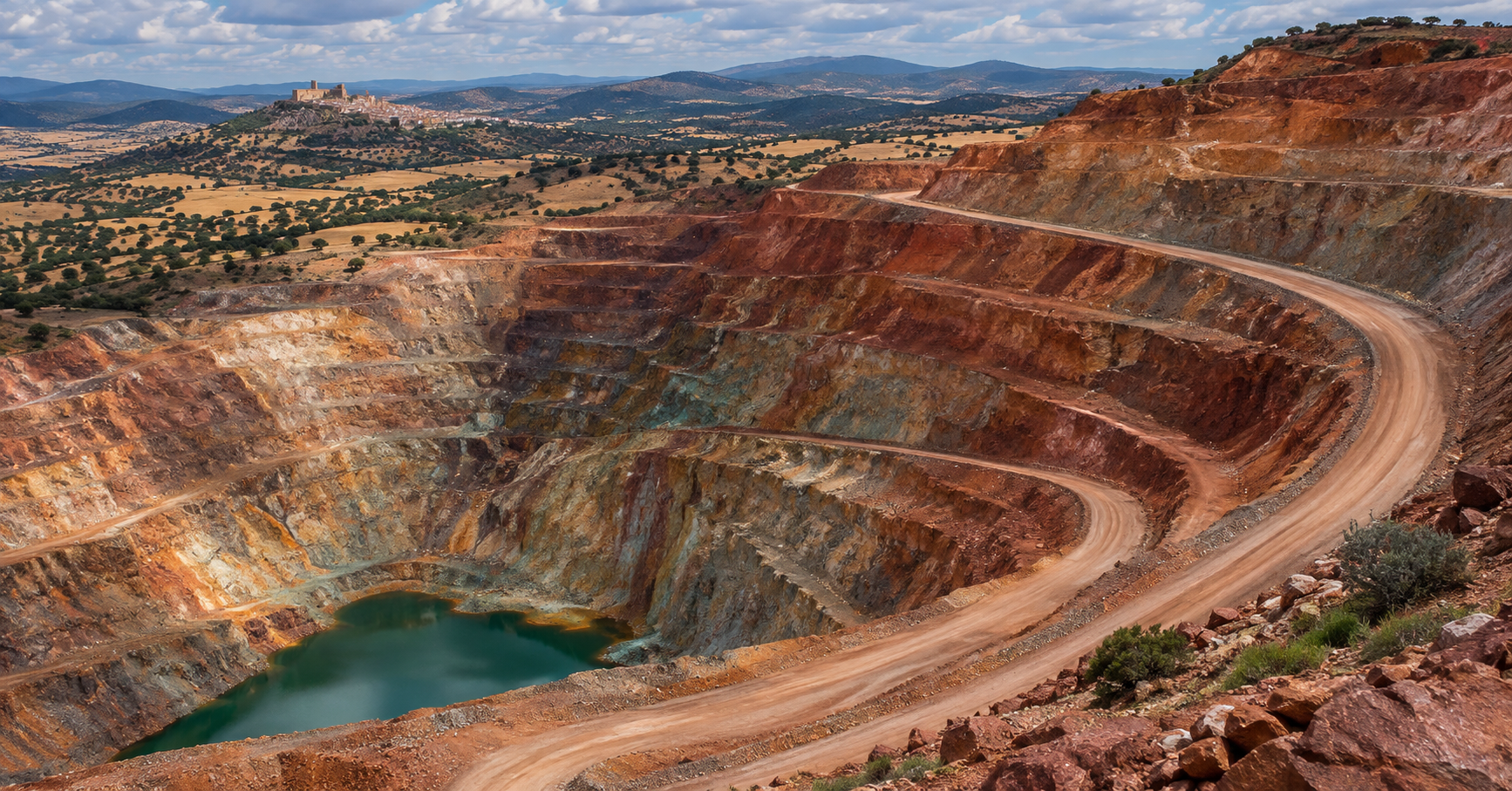
Atalaya Mining has acquired two former mines in southern Spain for €125 million, adding a substantial mineral inventory to a business that already has several projects seeking capital. The purchase comes as its operating Riotinto complex is benefiting from higher copper prices, giving Atalaya greater capacity to advance those assets. The near-term obligation is clear: €75 million has been paid and a further €50 million falls due within a year. The cost and timetable for bringing the acquired deposits back into production are still to be established.
The transaction extends the story in AER’s October assessment of Riotinto’s improving copper recovery. That analysis focused on extracting more copper from existing infrastructure. The new question is how much of Atalaya’s stronger balance sheet can be committed to longer-dated growth while it develops ore sources and advances Touro.
What Atalaya bought
Atalaya operates Proyecto Riotinto, an open-pit copper mine and processing complex in Andalusia. It mines ore, concentrates the copper and sells the concentrate, so production, metal prices and treatment terms determine much of its revenue. Its regional knowledge is relevant to Tharsis and La Zarza: the acquired properties lie approximately 50 kilometers and 25 kilometers west of Riotinto, respectively, in the Iberian Pyrite Belt.
On November 11, Atalaya completed the purchase of all shares in Tharsis Mining, the private owner of both projects, from members of the López Magdaleno family. Mining at Tharsis stopped in 2001 and at La Zarza in 1991; historical operators mainly extracted pyrite for sulfuric acid. Both deposits also contain copper, zinc, lead and precious metals, which could support more than one revenue stream if they can be processed economically.
The €125 million price comprises €75 million in cash paid at completion and €50 million payable within 12 months. The deferred amount is secured by a bank guarantee and bears interest at 12-month EURIBOR plus 1.5 percentage points. Identified legacy and contingent liabilities, estimated at approximately €7 million, remain obligations of the acquired group. Atalaya issued no shares for this transaction.
The company reported more than €260 million of pro forma net cash after the upfront payment. That figure precedes the deferred consideration. Subtracting the €50 million principal alone implies more than €210 million on the same illustrative basis, before interest, the identified liabilities and any other intervening cash flows. This is a way to size the obligation, not a forecast of cash at its payment date.
A large resource, with work ahead
The disclosed resource estimates give the purchase scale. The acquisition announcement’s project tables report the following figures; totals combine measured, indicated and inferred categories.
| Project | Resource tonnage | Average copper grade | Contained copper | Inferred tonnage |
|---|---|---|---|---|
| Tharsis | 120.7 million tonnes | 0.59% | 0.71 million tonnes | 25.4 million tonnes |
| La Zarza | 107.0 million tonnes | 0.74% | 0.80 million tonnes | 39.2 million tonnes |
| Combined | 227.7 million tonnes | — | approximately 1.5 million tonnes | 64.6 million tonnes |
The copper is estimated to be in the ground, not the amount that can necessarily be recovered and sold. Inferred resources have lower geological confidence than measured and indicated resources, and the combined figures are not a statement of mineral reserves. Mining plans, metal recoveries, permitting and costs will determine how much of the inventory can support an economically viable operation.
There is useful technical work to build on. A 2023 preliminary economic assessment for Tharsis examined a five-million-tonne-per-year open pit and hydrometallurgical processing, which uses chemical solutions to recover metals. It is an early-stage assessment, not a construction commitment. Atalaya plans further studies, engineering, permitting and exploration; it has not disclosed a current capital budget or production schedule for the acquired projects in the purchase announcement.
Proximity to Riotinto may provide access to regional skills and infrastructure, and management expects potential operational and administrative synergies. The announcement does not establish that ore from either acquisition can be processed at Riotinto’s existing plant or quantify savings. The processing route is consequential because transport, recovery and plant investment can materially alter the value of a polymetallic deposit.
Higher prices lift operating earnings
Atalaya’s November 12 results and interim financial statements show why it could pay cash for the acquisition. Riotinto is the group’s operating mine, making the consolidated results a useful guide to the business currently funding its development pipeline.
| € millions, except where stated | Q3 2025 | Q3 2026 |
|---|---|---|
| Revenue | 106.8 | 187.8 |
| Gross profit | 21.6 | 83.3 |
| EBITDA, as reported | 30.7 | 90.1 |
| Operating profit | 16.7 | 73.9 |
| Profit after tax | 10.8 | 62.9 |
| Operating cash flow | 41.7 | 57.0 |
Revenue increased by 75.9%, while reported EBITDA margin rose from 28.8% to 48.0%. Atalaya’s average realized copper price, excluding quotational-period adjustments, increased to US$6.44 per pound from US$4.41. Copper contained in concentrate sold rose to 15,243 tonnes from 12,234 tonnes, helped by sales from inventory. These are reported U.S.-dollar price measures; the financial statements are in euros and no currency conversion is assumed here.
The cost side also rose. Mine-site operating and administrative costs increased to €88.3 million from €71.1 million, while mine-site depreciation and amortization rose to €16.2 million from €14.0 million. Group operating profit follows after corporate expenses, share-based benefits, exploration and other income. Atalaya’s reported EBITDA is a different measure from IFRS operating profit; adding back the €16.2 million of mine-site depreciation and amortization brings the latter to approximately €90.1 million.
Higher prices should not obscure the operating mix. Third-quarter copper production increased to 13,967 tonnes from 12,123 tonnes as a higher ore grade and recovery offset lower ore throughput. For the first nine months, however, output fell to 37,399 tonnes from 39,589 tonnes, mainly because the ore grade was lower. Atalaya still expects full-year production near the low end of its original 50,000–54,000-tonne range. Reaching 50,000 tonnes would require 12,601 tonnes in the fourth quarter, compared with 13,967 tonnes in the third.
Cash available for competing projects
Earnings have translated into cash, though the timing differs. Third-quarter cash generated before working-capital changes was €94.8 million; net operating cash flow was €57.0 million after those movements, taxes and interest. A €52.2 million increase in trade and other receivables absorbed cash, partly offset by a €6.2 million inventory release and an €11.1 million increase in payables. The receivables movement is material when assessing how quickly sales fund investment.
For the nine months through September, operating cash flow was €165.6 million and investing outflows were €69.7 million. The latter included spending on existing projects and an investment in Lara Exploration; it was not solely mine construction. Financing activities provided a net €93.4 million, including €150.2 million of gross share issuance proceeds, €5.3 million of issuance costs, net borrowing repayments and €18.5 million in dividends. Stronger operations and earlier equity financing therefore both contributed to liquidity.
At September 30, before the acquisition, cash was €354.1 million and borrowings were €11.9 million, giving reported net cash of €342.1 million, excluding lease liabilities. The quarter-end figure and the later pro forma figure have different dates and should not be treated as a continuous cash bridge without the intervening movements.
The company’s other plans will also draw on management attention and capital. At Riotinto, it is investing in the San Dionisio area and preparing access development at Masa Valverde. In northwest Spain, Proyecto Touro remains in permitting, with its environmental impact statement awaited. Atalaya has a phased agreement to earn up to 80% of Touro’s owner, subject to milestones; the economics attributable to Atalaya will depend on that ownership and the project’s eventual funding.
Management expects the new acquisitions to be sequenced after Touro’s development. That gives Atalaya time to study the deposits, but it also places the new investment behind projects with nearer-term demands. Its €52 million–€80 million guidance for 2026 non-sustaining capital investment relates to the existing program and is not a disclosed development budget for Tharsis or La Zarza.
For investors, the immediate markers are the deferred payment and Touro’s permitting progress. The more decisive longer-term evidence will be Atalaya’s studies of recovery, processing and capital needs at Tharsis and La Zarza. Those figures will show whether the acquired resources can generate returns sufficient to compete for capital with the company’s existing projects.
This material is provided for informational and educational purposes only and does not constitute investment advice or a recommendation to buy or sell any security.
About AER Insights
Alliance Equity Research publishes timely insights on company-specific developments, industry trends, capital markets activity, and emerging investment themes across global public markets, with a particular focus on undercovered companies, sectors, and developments that often receive limited attention from mainstream financial research. Our analysis focuses on the financial, strategic, and valuation implications behind the headlines, using company disclosures, filings, market data, and sector context to help investors understand what matters, why it matters, and what to watch next.
Get AER Insights by Email
Receive new AER Insights and research updates in your inbox.
Related Insights
 Biotechnology & Healthcare
Kura’s Leukemia Drug Sales Grow as Partnership and Financing Shape Future Returns
Kura Oncology’s first commercial medicine generated $13.9 million in third-quarter sales as more patients began treatment for a genetically defined form of acute myeloid leukemia. The launch is gaining traction, but Kura shares U.S. commercialization profits and losses with Kyowa Kirin and continues to fund extensive clinical development. A new Oberland Capital financing provides capital now and conditional access to more, alongside debt, equity issuance and a future sales-based obligation. The opportunity to treat newly diagnosed patients is larger than the current indication, but evidence from a Phase 3 program is not expected until 2028.
 Energy
RWE and KKR Share Capital Commitments as £12 Billion Wind Projects Advance
RWE and KKR have completed their partnership and secured financing for two British offshore wind farms requiring approximately £12 billion of investment. Each partner will own half of the projects, while RWE leads construction and delivery. Long-term power contracts provide greater revenue visibility, and project-level financing will help support development through expected commissioning in 2030. For investors, the transaction shares RWE’s capital commitments but leaves important details undisclosed, including the partners’ individual contributions. Construction costs, timing and electricity generation will determine how much value the projects ultimately deliver.
 Mining & Critical Minerals
Meridian’s Cabaçal Financing Offers Advance a Mine With Important Terms Unsettled
Meridian Mining has appointed an engineering and construction management contractor for its Cabaçal copper-gold project in Brazil and received indicative financing proposals, including packages totaling $400 million. The project’s feasibility study models a $2.09 billion after-tax net present value, but its initial capital estimate relies on tax credits and excludes financing charges. The financing offers remain subject to negotiation, while the mine installation permit was under review in the October technical report. The crucial issue for investors is how much of the modeled project value Meridian can retain after construction funding, sales arrangements and other obligations are settled.
 Mining & Critical Minerals
Lifezone’s Kabanga Project Needs Near-Term Funding as Orion Investment Talks Advance
Lifezone Metals is negotiating a potential investment in its Kabanga nickel project while seeking additional capital for its near-term activities. The company says it needs funding by February 2027 to support its operations and maintain a loan covenant. Kabanga’s feasibility study envisages an underground mine and concentrator in Tanzania, with $942 million in estimated pre-production capital. The terms of the Tanzanian government agreement, project financing and any outside investment will determine how the project advances and how much of its future economics Lifezone retains.
About Alliance Equity Research
Alliance Equity Research publishes independent and company-sponsored equity research on undercovered, emerging, and high-potential public companies globally. Our analyst-built, model-backed research combines fundamental business analysis, financial forecasting, and valuation.
Email: info@alliancekp.com · Website: https://allianceequityresearch.com
For detailed company research, financial models, or coverage inquiries, contact our research team.
Research commentary for informational purposes. This document does not constitute personalized investment advice or a Buy, Hold, or Sell recommendation. For important disclosures, including information about research sponsorship and potential conflicts of interest, visit allianceequityresearch.com/disclosures.