 Alliance Equity Research
Lifezone’s Kabanga Project Needs Near-Term Funding as Orion Investment Talks Advance
Lifezone Metals is negotiating a potential investment in its Kabanga nickel project while seeking additional capital for its near-term activities. The company says it needs funding by February 2027 to support its operations and maintain a loan covenant. Kabanga’s feasibility study envisages an underground mine and concentrator in Tanzania, with $942 million in estimated pre-production capital. The terms of the Tanzanian government agreement, project financing and any outside investment will determine how the project advances and how much of its future economics Lifezone retains.
Lifezone Metals is seeking a partner for a Tanzanian nickel project whose construction would require far more capital than the company currently holds. Its immediate financing needs arrive sooner: Lifezone says it must raise additional capital by February 2027 to fund its activities and maintain a minimum cash covenant.
Lifezone confirmed on October 23 that it was in advanced negotiations with the Orion Critical Mineral Consortium over a significant equity investment in Kabanga. The amount Orion may invest and the ownership terms remain undisclosed, and the company has not announced a completed transaction.
Kabanga’s 2025 feasibility study estimated $942 million of pre-production capital for an underground mine and concentrator. Lifezone held $22.2 million of cash at September 30, 2026, some of it reserved for Kabanga. The near-term capital requirement concerns ongoing work and liquidity; funding construction would require a separate, substantially larger package.
All dollar amounts are U.S. dollars.
Kabanga’s proposed mine
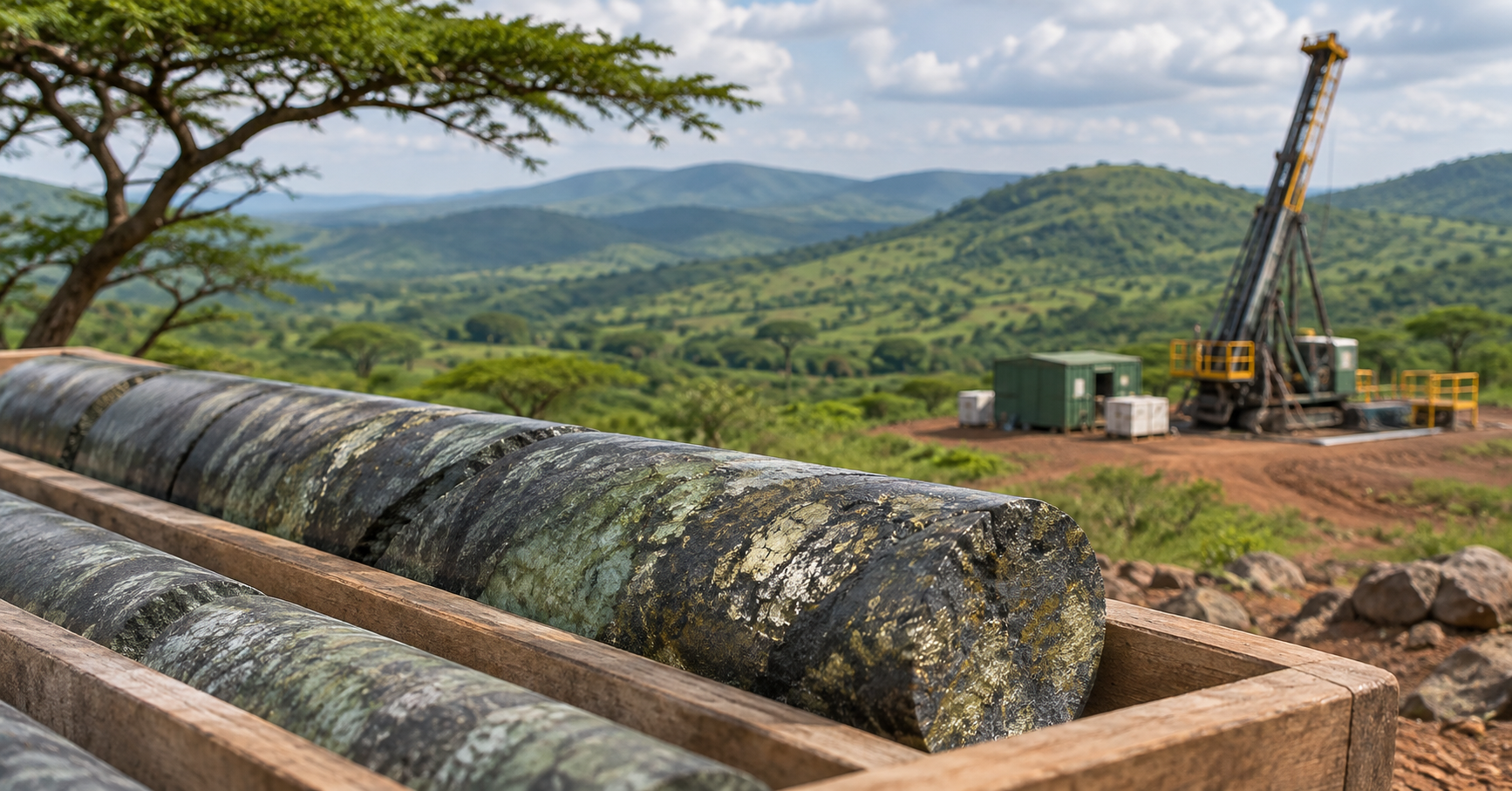
Kabanga is a nickel sulfide deposit in northwestern Tanzania. Lifezone’s current plan is to mine ore underground and process it into a concentrate containing nickel, copper and cobalt. That concentrate would be an intermediate product for downstream processing, not finished battery-grade metal.
The 2025 feasibility study envisages a concentrator capable of processing 3.4 million tonnes of ore annually and an 18-year mine life. Its mine plan contains 52.2 million tonnes of proven and probable reserves grading 1.98% nickel, 0.27% copper and 0.15% cobalt. The study excludes inferred resources from the mine plan and economic analysis.
Over the modeled mine life, the concentrate would contain 902,000 tonnes of nickel, 134,000 tonnes of copper and 69,000 tonnes of cobalt. Copper and cobalt provide by-product value alongside nickel, although actual proceeds would depend on recoveries, contract terms and prices.
Lifezone acquired BHP’s interest in the project-holding company in 2025. It currently owns 84% of the Kabanga project, with the Tanzanian government holding 16%. Bringing in a project investor would provide capital in exchange for a share of the project’s future economics.
The BHP acquisition carries deferred payments. Lifezone owes a fixed $10 million within 30 days after the earlier of 12 months following a final investment decision or raising $250 million in aggregate funding. A second payment, linked to Lifezone’s share price, is due within 30 days after the first anniversary of commercial production. The cap on total consideration was reduced to $75 million following confirmation that a resettlement condition had been met. These obligations affect the cash ultimately retained by Lifezone as the project advances.
The study’s economics and capital demands
The feasibility study estimates $942 million of pre-production capital, including contingency. Its $2.49 billion estimate for total capital over the mine life already includes that pre-production amount, as well as capitalized operating expenditure, growth, sustaining and closure costs.
| Kabanga feasibility study | Estimate |
|---|---|
| Pre-production capital | $942 million |
| Total life-of-mine capital, including pre-production | $2.49 billion |
| After-tax net present value at an 8% discount rate | $1.58 billion |
| After-tax internal rate of return | 23.3% |
| Assumed long-term nickel price | $8.49 per pound |
| Planned construction and subsequent ramp-up | Two years, then four years to full capacity |
The study’s after-tax value is a project-level estimate based on assumed metal prices, costs and timing. It is not a value per Lifezone share. The company’s attributable interest, future financing terms and obligations would all affect what shareholders ultimately receive.
The feasibility study estimates average all-in sustaining costs of $3.36 per pound of payable nickel in concentrate, net of copper and cobalt by-product credits. The estimate for the first five years of production is $5.50 per pound. Both are modeled figures; by-product prices, recoveries and actual operating performance will influence the costs achieved.
The study’s nickel-price sensitivity also illustrates the importance of the metal’s price to the project. At $6.00 per pound of nickel, the modeled after-tax NPV at an 8% discount rate falls to $459 million, compared with $1.58 billion at the $8.49 base-case price. These are project-level study scenarios, not forecasts of future nickel prices or Lifezone’s equity value.
The study also leaves a long interval between a construction decision and full production. Financing must cover development before the mine generates operating cash, while lenders and equity investors must assess construction, ramp-up and commodity-price risks.
Cash and near-term funding needs
Lifezone’s cash balance increased from $20.1 million at December 31, 2025 to $22.2 million at September 30, 2026. The modest increase came after substantial financing activity during the nine months, including an equity offering and bridge-loan draws.
| Cash flow, nine months ended September 30, 2026 | $ million |
|---|---|
| Cash used in operating activities | (7.9) |
| Cash used in investing activities | (24.1) |
| Cash provided by financing activities | 34.1 |
| Closing cash and equivalents | 22.2 |
Investing cash outflows included $24.8 million spent on Kabanga. Net investing outflows were lower, at $24.1 million, partly because the company received $0.7 million in bank interest.
Financing inflows included $23.3 million of net proceeds from an April share offering and $21.7 million drawn under the senior secured bridge facility. The company issued 5.7 million ordinary shares at $4.40 each. Net financing cash flow was $34.1 million after outflows including interest and commitment fees on the bridge loan and convertible debentures, transaction costs and lease payments.
Of the September cash balance, $5.93 million was held by Kabanga Nickel Limited and its subsidiaries and could be used only for the project. The borrowing entity must also maintain at least $5 million in cash under the bridge facility. Lifezone reported $32.14 million in net current liabilities at September 30.
Management’s interim financial statements say additional capital is needed by February 2027 for corporate expenditure, operations, project development and the cash covenant. The statements identify substantial doubt about the company’s ability to continue as a going concern, while explaining that directors believe further funding can be raised.
A bridge with a conditional final draw
Lifezone had drawn $41.7 million of its $60 million senior secured bridge facility by September 30. The remaining $18.3 million was subject to conditions including an amendment to the project’s Framework Agreement with Tanzania. Following an extension, the facility was available for further draws until November 29, 2026.
The facility supports Kabanga’s early work and financing process. Management’s liquidity assessment assumes the available facility is fully drawn and consumed by forecast activities before the final investment decision. Access to the final tranche would therefore support that work but would not, on the company’s stated assessment, remove the need for additional capital by February.
The loan carries 9.25% annual interest on drawn amounts and is secured against project-related assets. Its scheduled maturity is July 31, 2027, with a six-month extension option subject to compliance with the facility agreements. Lifezone expects project financing proceeds to refinance the loan, making the timing of a broader financing relevant to repayment.
Lifezone also has unsecured convertible debentures from a $50 million financing completed in 2024. They mature on March 27, 2028, bear interest at SOFR plus 4.0% subject to a 3.0% SOFR floor, and are convertible at the holder’s option at $8.00 per share, subject to customary adjustments. Quarterly interest payments after March 2026 are payable in cash. The debentures add a funding obligation beyond the bridge loan’s 2027 maturity.
Government terms precede project financing
The unresolved Framework Agreement and a joint financial model are intended to establish the sharing of Kabanga’s economic benefits between investors and Tanzania. Lifezone says agreement on both is a condition for successful project financing. The same Framework Agreement amendment also affects access to the undrawn bridge tranche.
The company expects its board to make a final investment decision in the first quarter of 2027, although it says the date could move depending on lender due diligence and financing terms. The proposed Orion investment is part of that funding process. Orion’s consortium was launched with the U.S. International Development Finance Corporation and Abu Dhabi sovereign investor ADQ.
A project-level equity investment could reduce the amount Lifezone needs to fund itself while giving the new investor a share of future project distributions. Its effect on existing shareholders depends on the valuation, ownership sold and associated rights, none of which has been announced.
Lifezone is also pursuing project debt. Its filing states that a final investment decision would increase investment cash requirements and require equity, including a project-level stake sale, alongside a multi-source debt package. The negotiations therefore have two distinct objectives: securing enough liquidity to continue near-term work and arranging capital on terms that support construction.
What comes next
The immediate milestones are an amendment to the Framework Agreement and access to the remaining bridge funds, followed by the additional financing Lifezone says it needs by February 2027. Binding project-financing terms would then clarify how construction is funded and how much of Kabanga’s future cash flow remains attributable to Lifezone.
This material is provided for informational and educational purposes only and does not constitute investment advice or a recommendation to buy or sell any security.
Companies Discussed
About AER Insights
Alliance Equity Research publishes timely insights on company-specific developments, industry trends, capital markets activity, and emerging investment themes across global public markets, with a particular focus on undercovered companies, sectors, and developments that often receive limited attention from mainstream financial research. Our analysis focuses on the financial, strategic, and valuation implications behind the headlines, using company disclosures, filings, market data, and sector context to help investors understand what matters, why it matters, and what to watch next.
Get AER Insights by Email
Receive new AER Insights and research updates in your inbox.
Related Insights
 Biotechnology & Healthcare
PTC’s Sephience Launch Lifts Sales as Milestone Payments and Acquisitions Shape Cash Flow
PTC Therapeutics’ Sephience launch is driving rapid product revenue growth, with more than 2,000 patients receiving the phenylketonuria treatment worldwide at the end of September. The company has raised its annual product sales outlook and acquired an experimental gene therapy for Fabry disease. The financial picture is more complex than the revenue growth alone: Sephience’s success has triggered acquisition-related payments, and royalties reported from another medicine have already been sold. Continued patient access and the cost of expanding PTC’s portfolio will determine how much cash the business retains.
 Technology & Semiconductors
AXT’s Wafer Sales Surge as Subsidiary Financing Adds Capacity and Shares Future Earnings
AXT’s third-quarter sales more than doubled from a year earlier as demand for indium phosphide wafers used in optical communications accelerated. Higher volumes and a richer product mix helped lift gross margin to 56%. The company is expanding capacity through its Chinese subsidiary Tongmei, where a proposed outside investment would bring in capital but reduce AXT’s ownership. Export permits, the timing of customer deliveries and the terms attached to subsidiary funding will influence how much of the manufacturing growth ultimately benefits AXT shareholders.
 Mining & Critical Minerals
Asante Gold Needs New Funding as Bibiani’s Recovery Takes Shape
Asante Gold has until November 30 to secure at least $100 million in new funding under an agreement with its lenders. As the company negotiates, its mines must generate enough cash to support investment and financing costs. Higher-grade ore at Bibiani could improve production, but the recovery depends on execution and the terms of the financing.
 Mining & Critical Minerals
US Lime’s Texas Kiln Nears Commissioning as Higher Costs Offset Revenue Growth
United States Lime & Minerals increased third-quarter revenue through higher prices and shipment volumes, while diesel costs and startup inefficiencies at its new Texas kiln reduced profit. Management expects final commissioning in the fourth quarter, when depreciation on the new equipment will begin. The company has ample cash to complete the project, but construction delays and early signs of slower Texas housing could limit demand for its output. Earnings improvement will require reliable production, lower unit costs and sufficient sales to earn a return on the investment.
About Alliance Equity Research
Alliance Equity Research publishes independent and company-sponsored equity research on undercovered, emerging, and high-potential public companies globally. Our analyst-built, model-backed research combines fundamental business analysis, financial forecasting, and valuation.
Email: info@alliancekp.com · Website: https://allianceequityresearch.com
For detailed company research, financial models, or coverage inquiries, contact our research team.
Research commentary for informational purposes. This document does not constitute personalized investment advice or a Buy, Hold, or Sell recommendation. For important disclosures, including information about research sponsorship and potential conflicts of interest, visit allianceequityresearch.com/disclosures.