 Alliance Equity Research
Nova’s Chip Measurement Sales Rise as Memory and Packaging Investment Expands
Nova reported a 28% increase in third-quarter revenue as semiconductor manufacturers bought more of its measurement equipment. The company helps chipmakers inspect the dimensions and materials of devices during production and has expanded its presence in advanced packaging. Higher gross profit outpaced the increase in operating expenses, lifting operating margin. Nova expects further sequential revenue growth in the fourth quarter, although future demand will depend on how customers divide their spending among memory, logic and packaging projects. The results also show how working-capital movements can affect cash generation from one quarter to the next.

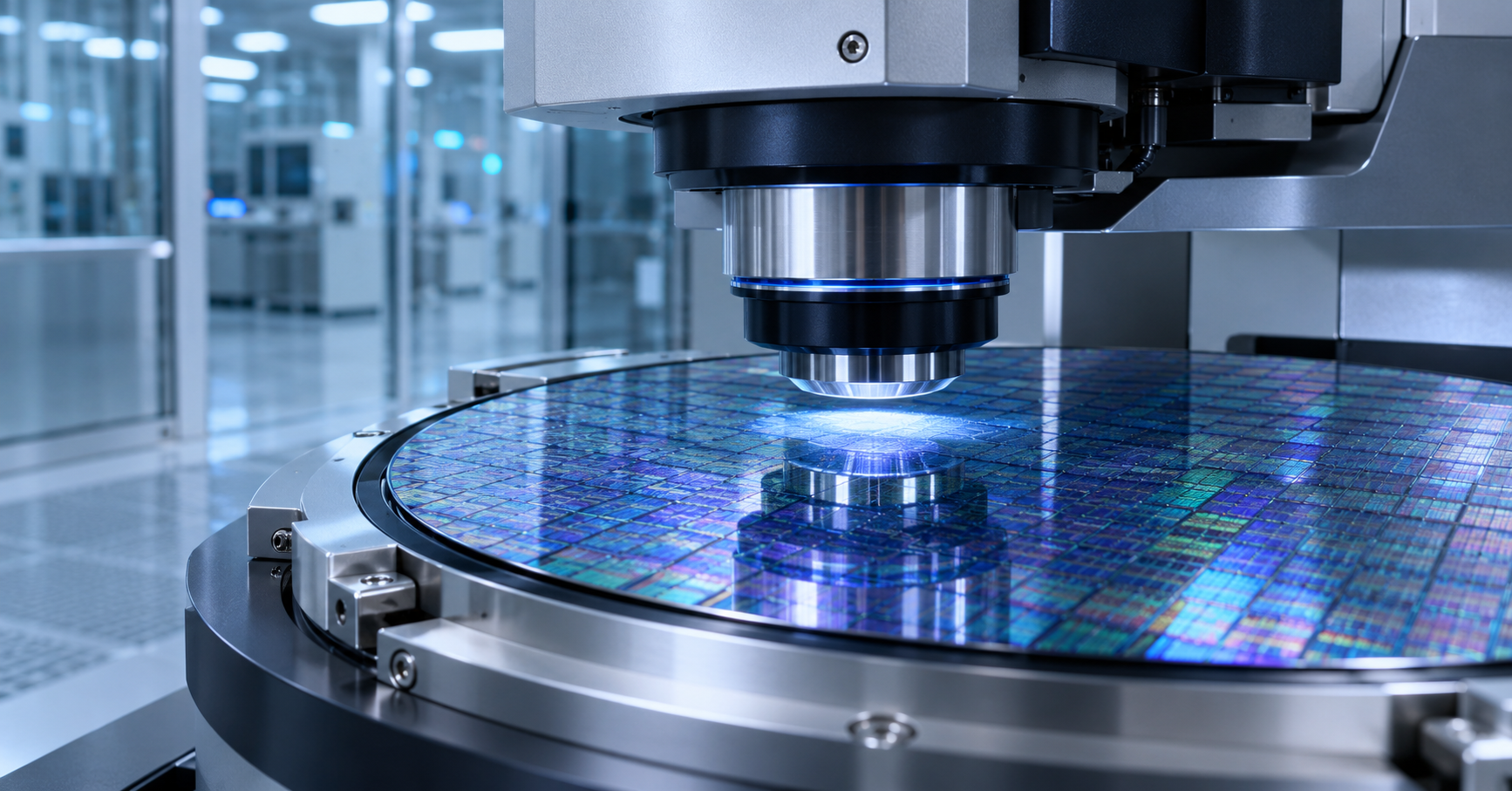
Nova’s third-quarter results show how investment in memory and advanced chip packaging is driving demand for the equipment used to measure semiconductor components during production. Revenue rose to $287.8 million from $224.6 million a year earlier, while operating income increased to $92.8 million from $63.9 million.
The company reported record revenue from both memory and advanced-packaging applications, although it did not disclose their individual contributions. Its fourth-quarter forecast points to further growth. Beyond the near term, Nova’s sales will depend on how much customers invest in different chip technologies and how many measurement tools their production processes require.
Where Nova fits in chip manufacturing
Nova makes measurement equipment and software used by semiconductor manufacturers. Its tools help customers examine the dimensions and material composition of chips at various stages of production.
Chipmaking involves repeatedly depositing, shaping and modifying layers of material on a silicon wafer. Small variations in those steps can affect the performance of the finished device. Measurements help manufacturers identify problems and adjust their processes before additional wafers are affected.
Nova offers optical systems that measure dimensions, tools that examine material composition and equipment that monitors chemicals used in manufacturing. Some systems work alongside production equipment, while others inspect wafers separately. The company also provides services for its installed equipment.
The types of measurements required change as chip designs become more complex. Nova’s Metrion system, for example, measures the concentration of chemical elements at different depths in a material. In January, the company said two leading manufacturers had purchased the platform for advanced memory and gate-all-around logic production.
Gate-all-around is a transistor design in which the gate surrounds the channel through which current flows. The design gives chipmakers another way to control current as device structures become smaller. For Nova, a transition to a new design can create opportunities to sell additional measurement tools, although the number of tools ultimately depends on the customer’s process and capacity plans.
Advanced packaging adds another application
Nova is also benefiting from investment in advanced packaging, which connects multiple chips within a package so they can work together. One application is high-bandwidth memory, or HBM, which stacks memory chips to move data rapidly to processors.
Packaging creates measurement challenges of its own. Manufacturers must inspect layers and surfaces while working with wafers that may be warped or have different shapes and surface conditions. Nova designed its WMC optical platform for these applications.
In July, the company said a major foundry had selected WMC after a competitive evaluation as a tool of record for measuring multiple layers in advanced packaging. Nova also reported deployments at several foundry and memory customers. It did not disclose the foundry’s name or the value of its orders.
The selection gives Nova a position in a customer’s production process, with future sales dependent on how that customer deploys the platform and expands capacity. On its November earnings call, management said more than 10 customers had either placed orders for WMC or completed acceptance of the platform, with additional evaluations underway.
Nova reported record revenue from both memory devices and advanced-packaging solutions in the third quarter. Those categories can overlap because packaging used for HBM is connected to both. The company did not disclose separate sales or profits for either activity, so the results do not show how much WMC or HBM-related tools contributed to the quarter.
For broader context on the demand behind memory investment, see AER’s analysis of the AI memory boom and its effects on chipmakers and device manufacturers.
Higher sales lift operating margins
Product revenue rose 29.6% year over year to $231.9 million, accounting for most of Nova’s increase in quarterly sales. Service revenue grew 22.4% to $56.0 million as the company supported its installed base.
| $ millions, except margins | Q3 2025 | Q3 2026 |
|---|---|---|
| Product revenue | 178.9 | 231.9 |
| Service revenue | 45.7 | 56.0 |
| Total revenue | 224.6 | 287.8 |
| Gross profit | 127.4 | 166.1 |
| Operating expenses | 63.6 | 73.3 |
| GAAP operating income | 63.9 | 92.8 |
| GAAP operating margin | 28.4% | 32.3% |
| GAAP net income | 61.4 | 90.0 |
Source: Nova’s third-quarter results. Margins and growth rates are calculated from the reported figures before rounding.
Gross margin increased to 57.7% from 56.7%. Gross profit rose by $38.7 million, while operating expenses increased by $9.7 million. The difference lifted operating income by approximately $29.0 million and expanded operating margin by nearly four percentage points. Research and development accounted for $5.4 million of the increase in operating expenses.
GAAP net income rose to $90.0 million from $61.4 million. In addition to the improvement in operating income, net financing income increased to $16.8 million from $9.5 million. Income tax expense rose to $19.6 million from $12.0 million.
Nova also reported non-GAAP net income of $98.4 million for the quarter. The adjustments to GAAP earnings include share-based compensation and amortization of acquired intangible assets, after tax effects. Share-based compensation does not require the same immediate cash payment as a salary, but it remains a cost to shareholders.
Strong quarterly cash flow includes timing benefits
Nova generated $138.1 million in third-quarter operating cash flow, up from $71.3 million a year earlier and above its $90.0 million of net income. Changes in working capital contributed to the result: receivables fell by $12.1 million, payables rose by $11.6 million and deferred revenue increased by $18.4 million. An increase in inventory used $16.1 million.
The nine-month figures provide a broader view of cash conversion. Operating cash flow was $219.1 million, below net income of $234.2 million. Receivables absorbed $47.2 million over that period, showing how the timing of customer collections can affect cash flow from quarter to quarter.
Nova spent $12.9 million on property and equipment during the first nine months. Operating cash flow less those purchases was $206.2 million, excluding acquisitions and financial investments. During the third quarter, the company also spent $38.5 million repurchasing shares.
At September 30, cash, current bank deposits and current and noncurrent marketable securities totaled $1.79 billion. Nova also carried $734.6 million of convertible notes on its balance sheet, net of issuance costs. The notes had an original principal amount of $750 million and mature in 2030 unless converted or otherwise dealt with earlier.
Nova purchased capped calls in connection with the notes. These are intended to reduce potential conversion-related dilution or offset certain cash payments, subject to a cap. The company’s annual filing provides the terms of the notes and capped calls.
What the fourth-quarter outlook implies
Nova expects fourth-quarter revenue of $305 million to $315 million. The $310 million midpoint is 7.7% above third-quarter revenue and would bring full-year revenue to approximately $1.09 billion.
The third-quarter result was also above the company’s previous forecast. Revenue exceeded the $287 million upper end of that range by approximately $0.8 million.
Nova’s near-term outlook reflects strong demand, but the company relies on a relatively small group of large customers. Management said four customers each represented at least 10% of third-quarter product revenue. It also said approximately 61% of product revenue came from logic and foundry customers, with the remaining 39% from memory and other customers. These percentages apply to product revenue, not total company sales.
The mix of customer spending affects Nova because different devices and manufacturing processes require different measurement tools. Management said memory generally uses less process control than logic, while more advanced designs and packaging can require additional measurements. Growth in overall semiconductor equipment spending will therefore not necessarily translate into the same rate of growth for Nova.
The company has demonstrated that higher sales can produce faster operating-income growth when gross profit rises ahead of expenses. The next indicator for investors is whether customers sustain their equipment deployments across memory, logic and packaging. Both the volume and mix of those orders will influence Nova’s revenue and the margins it earns as production plans evolve.
This material is provided for informational and educational purposes only and does not constitute investment advice or a recommendation to buy or sell any security.
Companies Discussed
About AER Insights
Alliance Equity Research publishes timely insights on company-specific developments, industry trends, capital markets activity, and emerging investment themes across global public markets, with a particular focus on undercovered companies, sectors, and developments that often receive limited attention from mainstream financial research. Our analysis focuses on the financial, strategic, and valuation implications behind the headlines, using company disclosures, filings, market data, and sector context to help investors understand what matters, why it matters, and what to watch next.
Get AER Insights by Email
Receive new AER Insights and research updates in your inbox.
Related Insights
 Industrials & Aerospace
AdvanSix’s Rising Sales Mask Weaker Earnings as Ammonia Expansion Advances
AdvanSix reported higher third-quarter sales as it passed through rising raw-material costs, but lower production and input inflation reduced earnings. The U.S. manufacturer supplies nylon materials, fertilizers and industrial chemicals through an integrated network. Quarterly cash flow improved with help from working-capital movements, while free cash flow remained negative for the first nine months. A proposed federal grant could support a multiyear ammonia expansion. The company’s near-term cash position depends on customer advances, spending and operating performance, while the expansion remains subject to federal review.
 Biotechnology & Healthcare
BioCryst’s Revenue Outlook Rises as Pharmacy Inventory Complicates ORLADEYO Sales Growth
BioCryst raised its 2026 total revenue outlook after reporting third-quarter growth in ORLADEYO, its medicine for preventing hereditary angioedema attacks. The company left its product-specific forecast unchanged and said the broader increase reflects licensing revenue and orders for another medicine. A new pharmacy’s initial inventory also contributed to the quarter’s sales. Against that backdrop, BioCryst is funding a late-stage study of navenibart while meeting debt and royalty obligations. The results call for a closer look at recurring patient demand, cash commitments and the company’s next clinical milestone.
 Technology & Semiconductors
Advanced Energy’s Chip and Data-Center Growth Brings Higher Profits and Greater Cash Needs
Advanced Energy’s third-quarter sales rose 50% as demand increased for power equipment used in semiconductor manufacturing and data centers. Higher volumes and margins lifted operating profit, but the company also committed more cash to inventory and factory expansion. Its new Thailand facility has begun serving data-center customers, and management expects continued capital spending as it expands capacity. The results highlight both the earnings potential of supplying the technology buildout and the importance of converting rising shipments into cash as new products and production lines ramp.
 Technology & Semiconductors
AI’s Memory Boom Is Lifting Chipmaker Profits and Raising Costs for Device Makers
The AI infrastructure buildout is changing the economics of the memory industry. Chipmakers are allocating capacity to high-value server products and securing longer-term customer commitments, while phone and computer manufacturers face higher component costs. IDC estimates that global smartphone shipments fell 22% in the third quarter, with memory shortages contributing to the downturn. The effects are uneven: earlier inventory purchases have helped some device makers, while others face margin pressure. New factories could eventually expand supply, but their timing, product mix and returns will shape the next stage of the cycle.
About Alliance Equity Research
Alliance Equity Research publishes independent and company-sponsored equity research on undercovered, emerging, and high-potential public companies globally. Our analyst-built, model-backed research combines fundamental business analysis, financial forecasting, and valuation.
Email: info@alliancekp.com · Website: https://allianceequityresearch.com
For detailed company research, financial models, or coverage inquiries, contact our research team.
Research commentary for informational purposes. This document does not constitute personalized investment advice or a Buy, Hold, or Sell recommendation. For important disclosures, including information about research sponsorship and potential conflicts of interest, visit allianceequityresearch.com/disclosures.