 Alliance Equity Research
AdvanSix’s Rising Sales Mask Weaker Earnings as Ammonia Expansion Advances
AdvanSix reported higher third-quarter sales as it passed through rising raw-material costs, but lower production and input inflation reduced earnings. The U.S. manufacturer supplies nylon materials, fertilizers and industrial chemicals through an integrated network. Quarterly cash flow improved with help from working-capital movements, while free cash flow remained negative for the first nine months. A proposed federal grant could support a multiyear ammonia expansion. The company’s near-term cash position depends on customer advances, spending and operating performance, while the expansion remains subject to federal review.


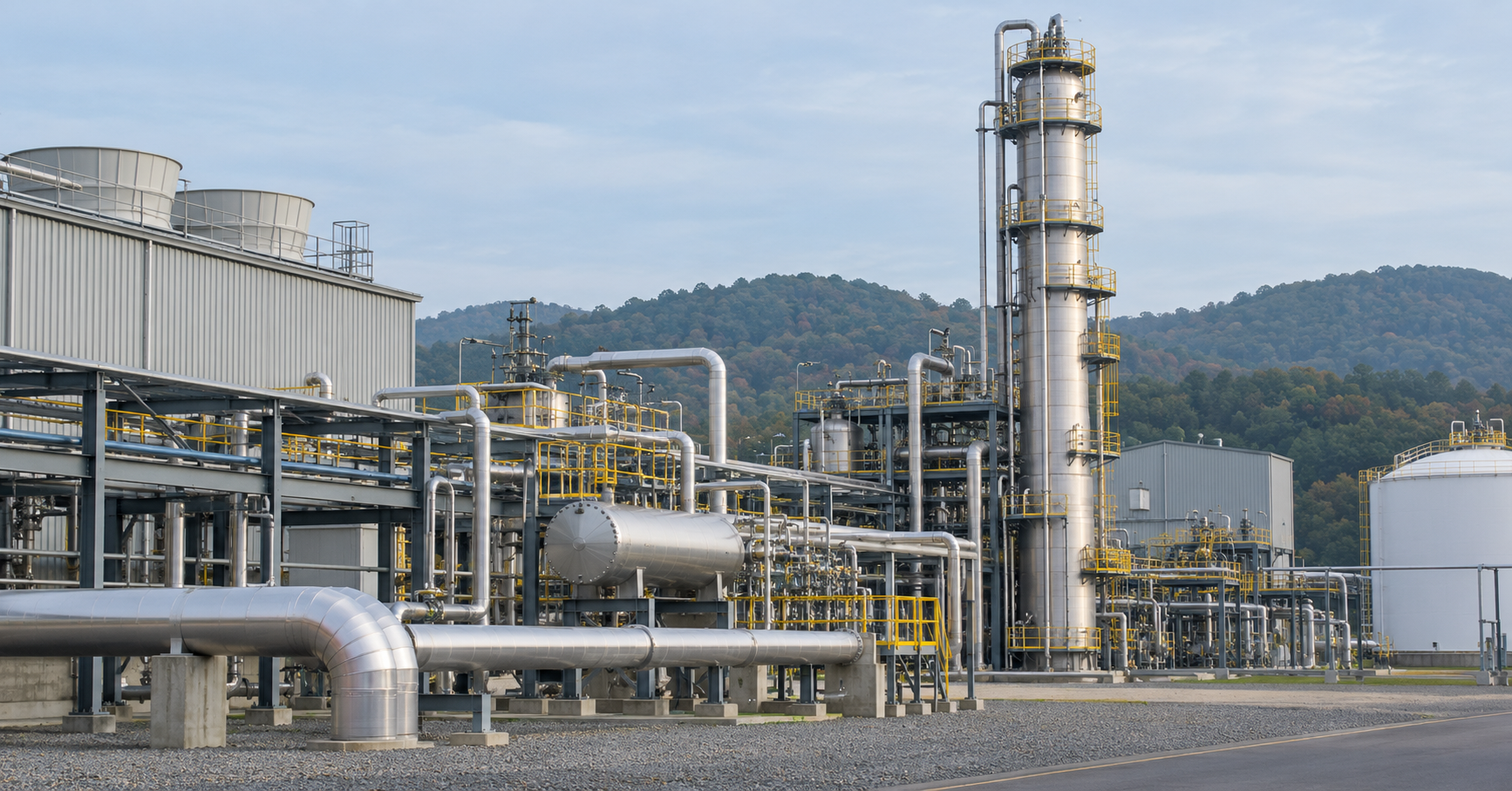
AdvanSix increased third-quarter sales by 15%, but higher input costs and reduced production pushed earnings lower. The company, which makes nylon materials, fertilizers and industrial chemicals, reported adjusted EBITDA of $14.6 million, down from $24.7 million a year earlier. Its GAAP net loss widened to $7.6 million.
Cash flow improved in the quarter, helped by inventory and payable movements. At the same time, AdvanSix has been selected for proposed federal funding toward a multiyear ammonia expansion. The grant could reduce the company’s share of the project’s cost, but stronger operating cash generation remains important as it maintains its existing plants and invests in additional capacity.
One production network, several markets
AdvanSix operates an integrated manufacturing network that makes several products from connected chemical processes. It produces caprolactam, a building block for nylon 6, and converts some of that output into nylon resin used in products such as packaging, automotive components and industrial materials.
The company also sells ammonium sulfate, a fertilizer supplying nitrogen and sulfur, and chemical intermediates including acetone. Some ammonium sulfate is produced alongside caprolactam; the company is also expanding its ability to make fertilizer directly. This connection gives management choices about how to use ammonia and other inputs, but demand and pricing can differ across its end markets.
In the third quarter, plant nutrients accounted for $149.3 million, or 35%, of company sales. Nylon contributed $104.7 million, caprolactam $73.1 million and chemical intermediates $103.7 million. Those figures describe product-line sales. AdvanSix does not disclose separate profit for each line, so the consolidated earnings figures cannot show which line generated the most profit.
Higher prices did not restore margins
Third-quarter revenue rose to $430.8 million from $374.5 million. Management attributed the increase to a 17% pricing benefit, partly offset by a 2% decline in volume. Its price analysis included a 10% contribution from raw-material pass-through arrangements and 7% from market-based pricing. Lower caprolactam sales drove much of the volume decline.
| $ millions, except margins | Q3 2025 | Q3 2026 |
|---|---|---|
| Sales | 374.5 | 430.8 |
| Gross profit | 25.4 | 11.2 |
| GAAP net loss | (2.6) | (7.6) |
| Adjusted EBITDA | 24.7 | 14.6 |
| Adjusted EBITDA margin | 6.6% | 3.4% |
| Operating cash flow | 26.6 | 48.0 |
| Capital expenditure | 26.5 | 18.3 |
Source: AdvanSix third-quarter results. Gross profit is calculated as sales less cost of goods sold.
Higher sales included amounts passed through to cover more expensive inputs. Management said raw materials were a $65 million year-over-year headwind to adjusted EBITDA, led by sulfur and benzene. Pricing in nylon and chemical intermediates more than offset the effect of higher benzene and propylene costs in those product lines, management said. Plant nutrients faced a less favorable balance between fertilizer pricing and sulfur costs.
Reduced production added pressure because fixed factory costs were spread across less output. Management also reported cost savings, including benefits within selling, general and administrative expenses. Consolidated gross profit nevertheless fell to $11.2 million from $25.4 million.
The GAAP net loss increased even though selling, general and administrative expense fell to $19.2 million from $27.4 million. Net interest expense rose to $4.0 million from $2.3 million. Adjusted EBITDA adds back interest, tax and depreciation and includes other adjustments; it is not cash earnings after maintaining the plants. For the quarter, the company reconciled its $7.6 million GAAP loss to a $6.6 million adjusted net loss, mainly by adding back stock compensation and acquisition-related amortization, net of tax.
A stronger quarter for cash
Operating cash flow rose to $48.0 million from $26.6 million in the prior-year quarter, despite the wider net loss. A $44.3 million increase in accounts payable and a $12.7 million reduction in inventory supported cash flow. Receivables used $6.2 million, while accrued liabilities used $12.1 million. Depreciation and amortization added back $21.1 million because it reduced accounting earnings without an equivalent current-period cash charge.
Capital expenditure declined to $18.3 million from $26.5 million. AdvanSix therefore reported $29.7 million of free cash flow, which it defines as operating cash flow less capital expenditure, compared with approximately $0.1 million a year earlier.
The company’s cash-flow statement shows a weaker nine-month picture. Operating cash flow was $42.7 million and capital spending was $74.9 million, leaving free cash flow of negative $32.3 million. Inventory released $55.1 million during the period, while receivables absorbed $39.6 million and customer advances declined by $12.9 million.
Management sees a path to approximately break-even free cash flow for 2026. Given the nine-month deficit, that implies roughly $32.3 million of positive free cash flow in the fourth quarter. With about $15.1 million of capital spending implied by the $90 million annual forecast, operating cash flow would need to be about $47.3 million. These are calculations from the company’s figures, not a separate company forecast.
A fertilizer pre-buy program, under which customers pay ahead of the next growing season, is part of that expectation. Such advances can improve cash flow when received, while the associated product must still be supplied later. Management’s break-even path excludes an expected $18 million carbon-capture tax refund for 2018–2020; it said the refund could move into 2027 and had not yet received formal notification.
Debt and planned investment
At September 30, AdvanSix had $22.6 million in cash. Its credit agreement comprised a $150 million term facility and a $275 million revolving facility. The company reported $270 million in borrowings before debt issuance-cost adjustments and approximately $154 million of available credit. These are drawn and available amounts, not separate cash balances.
Nine-month financing cash flow was positive $35.6 million. It included $150 million of term-loan proceeds and $95 million of net revolving-credit repayments, alongside financing fees and $12.9 million of dividend payments. Together with $42.7 million of operating inflow and $75.5 million of investing outflow, those movements explain the $2.8 million increase in cash during the period.
The new facilities mature in August 2031, according to the quarterly filing. The agreement includes leverage and interest-coverage covenants, and the company said it was in compliance at September 30 and through its quarterly filing date. Actual future borrowing capacity will depend on those terms and operating performance.
For 2026, management now expects about $90 million of capital spending, within its previous $75 million–$95 million range. That annual figure includes spending on existing growth programs such as SUSTAIN; it should not be added again to the same projects’ annual costs.
Ammonia expansion comes with conditions
On October 29, AdvanSix said it had been selected for $47.4 million of proposed U.S. Department of Agriculture funding for Project CENTURY at its Hopewell, Virginia, site. The planned $98.1 million multiyear project would modernize the ammonia facility and add approximately 84,000 tons of annual ammonia production capacity.
The proposed federal amount equals about 48.3% of the stated project cost, leaving approximately $50.7 million before any other funding or changes in scope. The grant has not yet been received: it remains subject to USDA administrative and risk reviews. Management expects the investment to run through 2031, with modest 2027 spending and more concentrated spending in 2029–2031.
Additional ammonia could be sold or used within the company’s integrated operations, including fertilizer production. Management expects the proposed grant structure to support a project return above its 20% discretionary-investment hurdle, but the company has not disclosed the underlying cash-flow assumptions.
Some modernization work would otherwise be considered within ongoing capital spending. Management’s preliminary starting point for 2027 is approximately $80 million for base capital and the final SUSTAIN project, with a fuller view of incremental discretionary spending to follow. The $98.1 million project total should therefore not be mechanically added to every annual capital plan.
The near-term measure is whether AdvanSix can generate the roughly $47 million of fourth-quarter operating cash implied by its break-even free-cash-flow path while managing customer advances and planned investment. Beyond that, the company’s ability to improve the spread between fertilizer prices and sulfur costs, alongside the final grant terms, will influence how much cash is available for expansion.
This material is provided for informational and educational purposes only and does not constitute investment advice or a recommendation to buy or sell any security.
Companies Discussed
About AER Insights
Alliance Equity Research publishes timely insights on company-specific developments, industry trends, capital markets activity, and emerging investment themes across global public markets, with a particular focus on undercovered companies, sectors, and developments that often receive limited attention from mainstream financial research. Our analysis focuses on the financial, strategic, and valuation implications behind the headlines, using company disclosures, filings, market data, and sector context to help investors understand what matters, why it matters, and what to watch next.
Get AER Insights by Email
Receive new AER Insights and research updates in your inbox.
Related Insights
 Technology & Semiconductors
Nova’s Chip Measurement Sales Rise as Memory and Packaging Investment Expands
Nova reported a 28% increase in third-quarter revenue as semiconductor manufacturers bought more of its measurement equipment. The company helps chipmakers inspect the dimensions and materials of devices during production and has expanded its presence in advanced packaging. Higher gross profit outpaced the increase in operating expenses, lifting operating margin. Nova expects further sequential revenue growth in the fourth quarter, although future demand will depend on how customers divide their spending among memory, logic and packaging projects. The results also show how working-capital movements can affect cash generation from one quarter to the next.
 Biotechnology & Healthcare
BioCryst’s Revenue Outlook Rises as Pharmacy Inventory Complicates ORLADEYO Sales Growth
BioCryst raised its 2026 total revenue outlook after reporting third-quarter growth in ORLADEYO, its medicine for preventing hereditary angioedema attacks. The company left its product-specific forecast unchanged and said the broader increase reflects licensing revenue and orders for another medicine. A new pharmacy’s initial inventory also contributed to the quarter’s sales. Against that backdrop, BioCryst is funding a late-stage study of navenibart while meeting debt and royalty obligations. The results call for a closer look at recurring patient demand, cash commitments and the company’s next clinical milestone.
 Industrials & Aerospace
Minerals Technologies’ Sales Growth Outruns Earnings as Pricing Recovery Remains Incomplete
Minerals Technologies’ industrial products are growing, but higher costs and delayed contract-price adjustments have reduced consumer-business margins. Its latest results make pricing recovery central to near-term earnings improvement. New calcium-metal and steel-waste technologies offer additional markets, with commercial development still at an early stage. Cash generation has strengthened, while proposed funding for legacy talc claims remains substantial. October’s refinancing extends debt maturity at a higher interest cost. The existing businesses’ profitability will determine how much cash the company can generate while developing those opportunities and addressing its obligations.
 Industrials & Aerospace
Sensient’s Color Growth Raises Earnings as Natural-Color Expansion Absorbs More Cash
Sensient’s Color Group increased third-quarter sales 18.1% and operating profit 22.0% as food manufacturers reformulated products. Its formulation expertise and botanical supply network support natural-color adoption, while inventory and factory expansion are increasing cash requirements. Across the company, nine-month operating cash flow fell below capital expenditure, and borrowing increased. Color’s stronger margins demonstrate an earnings contribution from higher volumes. The expansion’s financial progress will depend on maintaining that profitability as new capacity enters service and converting more sales into cash to support continued investment.
About Alliance Equity Research
Alliance Equity Research publishes independent and company-sponsored equity research on undercovered, emerging, and high-potential public companies globally. Our analyst-built, model-backed research combines fundamental business analysis, financial forecasting, and valuation.
Email: info@alliancekp.com · Website: https://allianceequityresearch.com
For detailed company research, financial models, or coverage inquiries, contact our research team.
Research commentary for informational purposes. This document does not constitute personalized investment advice or a Buy, Hold, or Sell recommendation. For important disclosures, including information about research sponsorship and potential conflicts of interest, visit allianceequityresearch.com/disclosures.