 Alliance Equity Research
FireFly’s Cash Gives Green Bay Financing Flexibility Ahead of a 2027 Investment Decision
FireFly’s A$337.1 million cash balance strengthens its position as Green Bay approaches feasibility and construction financing. For shareholders, the benefit depends on the remaining capital requirement and funding terms. The larger mine plan offers more production, accompanied by additional investment and a longer development programme.

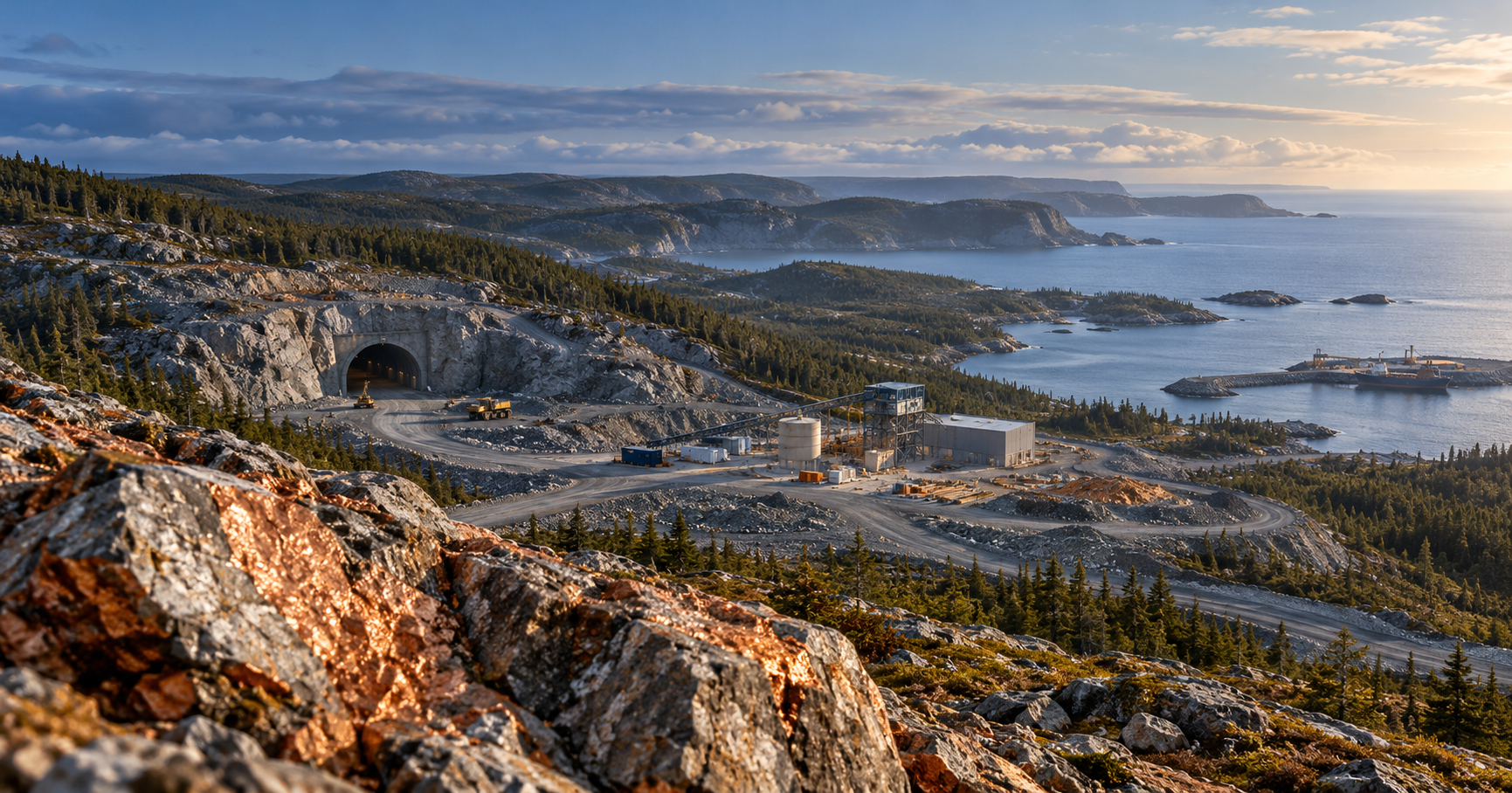
A stronger balance sheet ahead of construction financing
FireFly Metals is preparing to restart and expand copper-gold production at the previously operated Ming underground mine, part of its Green Bay project in Newfoundland and Labrador. Its September-quarter report confirms A$337.1 million of cash and cash equivalents at 30 September, following approximately A$185 million of gross equity funding. That gives the developer greater capacity to advance engineering, drilling and early works while negotiating the finance needed for construction.
The quarterly report released to the ASX on 29 October follows the preliminary economic assessment announced in August. FireFly is targeting a definitive feasibility study in the first quarter of 2027 and an investment decision in mid-2027. The study should establish a firmer construction budget and production schedule, providing the basis for a financing package.
For shareholders, the equity raise reduces near-term funding pressure and gives management more flexibility in those negotiations. Green Bay still needs committed construction finance, permits and a development decision before the production and cash generation modelled in the preliminary study can become an operating business. FireFly trades on both the ASX and TSX under FFM.
How the proposed mine would generate revenue
The operation would extract copper-bearing rock underground, crush and grind it, then use flotation to separate valuable minerals into a concentrate. Smelters would pay for the recoverable copper and associated gold and silver, subject to processing and commercial charges. Additional precious metals would be recovered into doré, a partly refined gold-silver product.
Existing underground workings provide a starting point, but FireFly must still invest in mining equipment, processing facilities and supporting infrastructure. The base plan would use trucks to bring mined material to surface. A larger alternative would introduce shaft haulage to move substantially greater volumes, requiring additional infrastructure and a longer development programme.
The August assessment envisaged a base operation processing 1.8 million tonnes of ore annually. Projected payable production averages approximately 50,000 tonnes of copper equivalent annually over a 14-year period after ramp-up. Copper equivalent expresses the combined value of copper, gold and silver in copper units; it includes the contribution from precious metals.
The economics depend on the grade of ore delivered to the plant, the proportion of metal recovered and the cost of mining and processing each tonne. Higher throughput can spread infrastructure costs across more production, although lower grades or more expensive underground access can absorb some of that benefit. Concentrate quality, freight and smelter terms determine how much of the contained metal value reaches FireFly.
Available cash covers a meaningful share of initial capital
The latest quarterly report presents base-case initial capital of A$516 million after approximately A$55 million of potential refundable Canadian tax credits. Adding those credits back implies approximately A$571 million before their receipt.
| Funding reference | A$ million | Basis |
|---|---|---|
| Cash and cash equivalents | 337.1 | Unaudited, 30 September 2026 |
| Cash plus liquid investments | 349.7 | Unaudited, 30 September 2026 |
| Base-case initial capital after expected tax credits | 516 | Preliminary study estimate |
| Expected refundable tax credits | Approximately 55 | Subject to eligibility and project delivery |
| Implied initial capital before tax credits | Approximately 571 | AER calculation: 516 + 55 |
Cash alone represents approximately 59% of the study’s gross initial capital, calculated as A$337.1 million divided by A$571 million. FireFly can therefore bring a meaningful financial contribution to construction-financing discussions. However, those corporate funds also support feasibility work, exploration and other expenditure before the investment decision.
The amount still required at that decision will depend on the updated construction budget, expenditure already completed, financing costs and the cash retained for other commitments. Early works that form part of the development can reduce remaining construction expenditure. Exploration beyond the current mine plan uses cash without necessarily reducing that construction requirement.
Tax credits affect the timing as well as the amount of funding. The technical report’s tax assessment makes their availability, timing and value conditional on final design, execution and legislative eligibility. FireFly may need to fund qualifying expenditure before receiving a refund, creating an interim financing requirement even if the expected credit is ultimately received in full.
Funding choices will shape shareholder returns
The institutional placement and Canadian financing issued approximately 101.1 million shares, followed by another 2.8 million under the share purchase plan. Together, the transactions added approximately 103.9 million shares. The development programme is better funded, with future earnings shared across a larger equity base.
The quarterly cash-flow statement reported A$175.8 million of net financing inflows, after transaction costs and lease payments. Operating activities used A$2.6 million, while investing activities used A$20.6 million, including underground development, drilling, studies and equipment. The larger investing outflow reflects where much of the spending occurs before a mine begins production.
Construction would increase expenditure beyond the current engineering and exploration programme. The September balance gives FireFly time to prepare for that commitment, but does not establish how much further equity will be needed. That depends on the feasibility budget and the amount of project finance available on acceptable terms.
FireFly is discussing project debt, offtake and other financing arrangements. An offtake agreement commits future product to a buyer and may include an advance payment, helping fund construction while introducing delivery obligations. Debt and customer advances can reduce the equity needed upfront, but repayment, interest, security and commercial terms can reduce the cash subsequently available to shareholders or for expansion.
The larger mine plan requires another stage of investment
The 4.6-million-tonne annual processing case would produce more metal over a shorter mine life. It requires shaft haulage and expanded processing capacity, with a higher initial capital commitment followed by further expansion spending.
| Study measure | Base case | Larger case |
|---|---|---|
| Annual ore-processing capacity | 1.8 million tonnes | 4.6 million tonnes |
| Modelled mine life | 32.3 years | 22.3 years |
| Average annual payable copper equivalent over the whole mine life | 35,000 tonnes | 60,000 tonnes |
| Initial capital, after expected tax credits | A$516 million | A$566 million |
| Subsequent expansion capital, after expected tax credits | None | A$484 million |
| After-tax project NPV at a 7% discount rate | Approximately A$2.2 billion | Approximately A$3.0 billion |
The larger design requires A$50 million more initial capital than the base case, followed by A$484 million of expansion capital. Combined initial and expansion spending would be approximately A$1.05 billion after expected tax credits, before sustaining expenditure. Management expects the expansion component to be substantially funded by cash generated from the initial operation.
That expectation connects the expansion’s funding to commissioning, production performance and cash retention at the first stage. The technical report envisages at least five years for shaft construction, followed by a staged increase in processing rates. Higher output would emerge over a development period, accompanied by additional spending.
The modelled increase in project NPV from approximately A$2.2 billion to A$3.0 billion incorporates that expenditure and the larger production schedule. Both estimates use assumed metal prices, including US$5 per pound of copper, and exclude financing costs. Debt service, corporate expenditure and any further dilution would affect the value and cash ultimately attributable to FireFly shareholders.
The feasibility study must establish the initial operating case
The current assessment uses Ming alone, excluding Little Deer and regional exploration targets. Measured and indicated resources account for 79% of the base-case life-of-mine inventory and 89% over the first ten years. The remaining inventory includes inferred material, which requires greater geological confidence before it can support an ore reserve.
FireFly plans to publish its maiden ore reserve alongside the feasibility study in Q1 2027. Infill drilling and detailed engineering should provide greater confidence in the tonnes, grades and mining sequence available for development. The early production years are especially important because their cash generation would support debt repayment and potential expansion.
The Mount Joy discovery announced this week offers a separate source of potential resource growth. One hole intersected 22.5 metres grading 1.87% copper and 0.64 grams of gold per tonne. The prospect’s proximity to FireFly’s existing Nugget Pond facility warrants further investigation, although no resource or development economics have been established for Mount Joy.
FireFly’s stronger balance sheet improves its ability to complete feasibility work and negotiate construction funding. The next change in the investment assessment will come from the Q1 2027 feasibility study’s capital requirement, reserve-backed production schedule and resulting financing needs. Preserving the initial production profile within a manageable budget would strengthen its funding position. Higher costs, delayed tax-credit receipts or weaker early production would increase the financing burden and leave less cash for shareholders or expansion.
This material is provided for informational and educational purposes only and does not constitute investment advice or a recommendation to buy or sell any security.
Companies Discussed
About AER Insights
Alliance Equity Research publishes timely insights on company-specific developments, industry trends, capital markets activity, and emerging investment themes across global public markets, with a particular focus on undercovered companies, sectors, and developments that often receive limited attention from mainstream financial research. Our analysis focuses on the financial, strategic, and valuation implications behind the headlines, using company disclosures, filings, market data, and sector context to help investors understand what matters, why it matters, and what to watch next.
Get AER Insights by Email
Receive new AER Insights and research updates in your inbox.
Related Insights
 Biotechnology & Healthcare
Ligand’s First Results With XOMA Show Royalty Growth Beyond the Acquisition
Ligand’s first results with XOMA show a larger royalty base and continued growth in the legacy portfolio. Lower acquired overhead offers an earnings benefit, while the deal increases capital committed and debt. Year-end guidance also depends on stronger Captisol orders and contract income alongside royalties.
 Industrials & Aerospace
Constellium’s Recycling Gains Lift Earnings, but Higher Metal Prices Tie Up More Cash
Constellium’s higher earnings outlook reflects stronger recycling benefits and product economics despite slightly lower shipments. More expensive metal also increases working-capital requirements. Packaging and automotive sheet now drive most of the earnings improvement, making scrap costs, manufacturing efficiency and new capacity central to sustaining returns.
 Mining & Critical Minerals
Serabi’s Coringa Permit Delay Defers the Returns From Its Expanded Processing Plant
Serabi Gold’s production cut shifts attention from building capacity to securing permission to use it. Cash provides a cushion, but delayed Coringa ore deliveries and weaker Palito grades reduce the near-term output available to recover development spending and support shareholder returns.
 Mining & Critical Minerals
Hudbay Approves Copper World as Partner Funding Cushions a Larger Capital Commitment
Copper World’s construction approval gives Hudbay a defined route to a new U.S. mine. Partner capital and planned borrowing defer its cash contributions, but the revised study increases the commitment and makes later expansion spending central to the expected production gains.
About Alliance Equity Research
Alliance Equity Research publishes independent and company-sponsored equity research on undercovered, emerging, and high-potential public companies globally. Our analyst-built, model-backed research combines fundamental business analysis, financial forecasting, and valuation.
Email: info@alliancekp.com · Website: https://allianceequityresearch.com
For detailed company research, financial models, or coverage inquiries, contact our research team.
Research commentary for informational purposes. This document does not constitute personalized investment advice or a Buy, Hold, or Sell recommendation. For important disclosures, including information about research sponsorship and potential conflicts of interest, visit allianceequityresearch.com/disclosures.