 Alliance Equity Research
Aecon’s Record Backlog Strengthens Growth Visibility, With Contract Mix Shaping the Earnings Upside
Aecon’s C$14.6 billion backlog and stronger third-quarter margins support further growth in power and infrastructure construction. A shift toward variable-price and collaboratively developed contracts could improve earnings predictability, while unusually strong cash receipts help finance a C$320 million utility buyout.


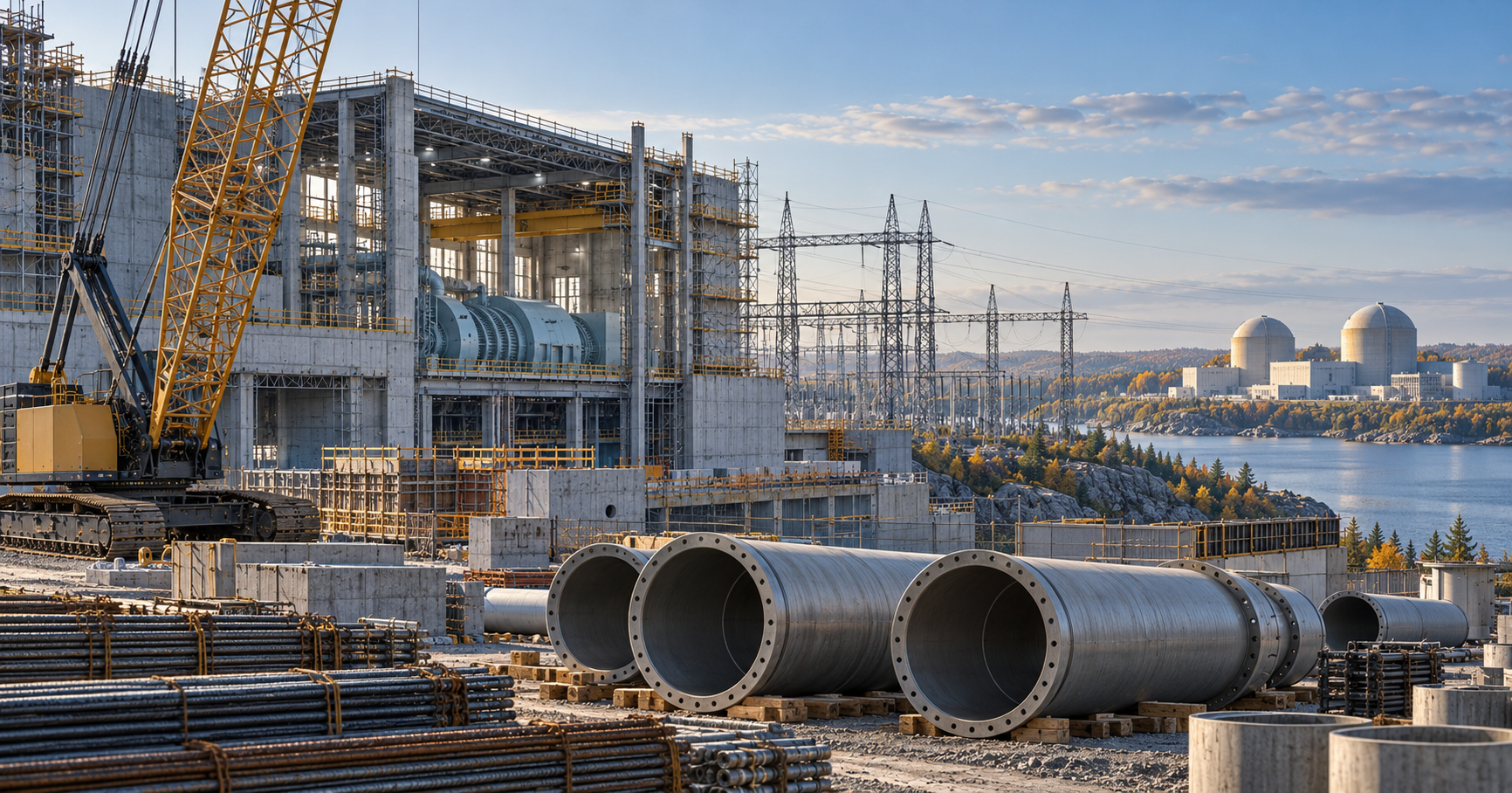
Aecon’s third-quarter results show a contractor securing substantially more work while improving the profitability of the projects already underway. Backlog reached C$14.6 billion at September 30, up 35% from a year earlier, and quarterly revenue increased 26%. Those figures strengthen the case for continued growth, although the eventual earnings benefit depends on contract terms, overhead spending and the cash required to deliver the work.
The results also improve Aecon’s capacity to fund a pending C$320 million utility investment. However, the quarter’s unusually strong cash generation includes substantial working-capital releases, and roughly half the reported cash balance sits within joint operations. Investors should distinguish the improvement in project economics from the timing of receipts and the availability of that cash. All figures below are in Canadian dollars.
Power and nuclear projects expand the revenue base
Aecon Group (TSX: ARE) builds and maintains infrastructure, including electricity networks, nuclear facilities, power stations and transport systems. Customers pay for engineering, procurement, construction and maintenance services. Its Concessions business also invests in infrastructure assets, giving the group exposure to their longer-term operating economics.
Two awards explain much of the quarter’s order intake. Aecon booked its C$1.7 billion share of the Greenlight Electricity Centre contract, covering a 932-megawatt natural-gas power plant serving a major data-centre development in Alberta. Its exposure to AI infrastructure therefore comes through constructing the electricity supply that computing facilities require.
A further C$1.75 billion came from Pickering nuclear refurbishment contracts. These involve replacing major reactor components and turbine-generator equipment for Ontario Power Generation, extending the station’s operating life. Execution is expected to begin in January 2027, subject to regulatory approval. The C$1.75 billion represents Aecon’s share of contracts worth C$3 billion across its partnerships.
Together, these awards contributed C$3.45 billion, approximately 58% of consolidated quarterly awards of C$5.99 billion. Orders were about 3.1 times quarterly revenue, an AER calculation that shows new work replenishing the order book substantially faster than existing work was being delivered. These are multiyear contracts, so their value should not be treated as revenue available entirely in 2027.
The contract mix offers protection, with important differences
Aecon’s third-quarter presentation breaks backlog into 64% variable-price contracts, 17% collaborative fixed-price contracts and 19% other fixed-price contracts. Management combines the first two categories when describing 81% of backlog as variable-price or collaborative. That distinction matters when assessing the risk behind the headline.
Variable-price arrangements can reduce exposure to changes in input costs, depending on the specific reimbursement and pricing provisions. Collaborative fixed-price contracts remain fixed-price commitments, but follow a joint development or sole-negotiation phase. Earlier involvement can improve the definition of scope, scheduling and costs before the construction price is agreed.
That process can reduce the likelihood of bidding against incomplete information. It does not remove labour shortages, productivity problems, procurement errors or disputes over which party bears additional costs. The stronger assessment is that Aecon has a more favourable framework for estimating and allocating risk, with meaningful fixed-price exposure still present.
The transition also takes time. Variable-price and collaborative contracts represented 69% of trailing-12-month revenue, below their 81% share of backlog. As the order book converts into construction activity, the mix provides a basis for improved earnings predictability. Quarterly margins will still depend on which projects are active and how effectively they are delivered.
Better project margins face higher corporate costs
The quarter brought improvement across both reported operating profit and adjusted EBITDA, although the extent of margin expansion differed.
| Consolidated measure | Q3 2026 | Q3 2025 | Year-on-year change |
|---|---|---|---|
| Revenue | C$1,920.6m | C$1,530.2m | +25.5% |
| Gross margin | 10.5% | 8.6% | +1.9 percentage points |
| Adjusted EBITDA | C$130.2m | C$92.7m | +40.5% |
| Adjusted EBITDA margin | 6.8% | 6.1% | +0.7 percentage points |
| IFRS operating profit | C$83.1m | C$61.4m | +35.3% |
| IFRS operating margin | 4.3% | 4.0% | +0.3 percentage points |
| Diluted earnings per share | C$0.74 | C$0.60 | +23.3% |
Revenue growth was led by utilities and nuclear construction. Acquisitions contributed to utilities and industrial revenue, so the consolidated increase should not be read as entirely organic. Adjusted EBITDA also includes Aecon’s proportionate share of EBITDA from equity-accounted projects, which differs from cash distributed by those investments.
Gross profit increased by C$70.3 million, but marketing, general and administrative expenses rose by C$43.6 million to C$98.3 million. Management attributes the increase to personnel and incentive compensation, growth capacity, acquired businesses, enterprise-system implementation and acquisition-related costs. Higher depreciation and amortization absorbed another portion of the improvement.
The result is encouraging, but it also identifies where additional earnings gains must come from. Stronger contract margins have improved profitability; expanding the operating platform has consumed much of that benefit. Sustained operating-margin improvement would require gross-profit growth to outpace those supporting costs over time. Treating the whole overhead increase as temporary would overstate the earnings available from the current revenue base.
Cash generation improved beyond the seasonal recovery
Operating cash flow rose sharply, with improvement both before and after working-capital movements.
| Cash-flow measure | Q3 2026 | Q3 2025 |
|---|---|---|
| Operating cash flow before working-capital changes | C$134.0m | C$88.3m |
| Working-capital inflow/(outflow) | C$282.9m | C$(32.3)m |
| Cash from operating activities | C$416.9m | C$56.0m |
| Net cash expenditure on equipment and intangible assets | C$45.9m | C$7.1m |
Approximately 68% of quarterly operating cash flow came from working-capital releases. Aecon describes September cash balances as unusually strong following project close-out and progress receipts. The business is also seasonal, with construction activity and working-capital requirements varying through the year.
The nine-month financial statements show the mechanics. Cash benefited from higher deferred revenue and supplier payables, alongside a reduction in unbilled revenue, while receivables absorbed cash. These movements improve current funding, but some represent receipts ahead of future work or amounts still payable to subcontractors.
There is an underlying improvement as well: quarterly operating cash flow before working-capital changes rose 52%. That supports the earnings recovery. The C$417 million headline nevertheless combines this improvement with favourable collection and payment timing, making it unsuitable as a recurring quarterly cash assumption.
The utility buyout gives the cash a clear use
Of C$1.066 billion in September cash, C$537 million was held in joint operations and could not be accessed directly by Aecon. Cash outside those operations was C$529 million. Against that, the group had C$342 million drawn on revolving facilities, C$204 million of recourse long-term debt including leases, and the C$320 million utility preferred-share liability.
The agreement announced in June would acquire Oaktree’s convertible preferred investment in Aecon Utilities. It represents a 27.5% ownership interest on conversion; completing the purchase would secure Aecon’s full equity ownership. The agreed price implied a 13-times enterprise-value multiple against the subsidiary’s acquisition-related pro forma trailing EBITDA at March 2026.
Full ownership would allow Aecon to retain the subsidiary’s future economic benefits, while eliminating the preferred instrument. The price paid means value creation depends on the subsequent earnings and cash generated by the utility platform. Management expects adjusted earnings-per-share accretion, but has not quantified it in this announcement.
Aecon’s net-debt measure was C$337.8 million at September, including the preferred liability and excluding joint-operation cash. Paying for the preferred shares exchanges cash or borrowing capacity for an obligation already included in that measure. The transaction therefore consumes liquidity without creating an entirely new C$320 million economic debt burden.
The financing context also matters: Aecon raised C$164.7 million net from common shares during the first nine months. Its stronger cash position reflects operating receipts and external capital. Meanwhile, the nine-month IFRS shareholder loss of C$73.1 million includes a substantial non-cash remeasurement connected with the preferred investment. The accounting charge and the eventual cash purchase should be understood together.
Margin conversion is the next consequential evidence
Management continues to expect double-digit revenue growth in 2026, an outlook already stated with July’s results, and further growth in 2027. The larger backlog strengthens the support for that expectation. Management’s margin outlook is more measured: stabilization in Construction during 2026, followed by gradual improvement in 2027.
The last large fixed-price legacy project reached substantial completion in the second quarter, but commercial claims and settlement exposure remain. Completion reduces future construction activity on that project; it does not establish the final financial outcome.
AER’s assessment is that revenue visibility has improved substantially, while the contract mix offers a credible route to more predictable earnings. The next evidence should be sustained Construction margin improvement as major awards enter execution, alongside overhead growth that allows more gross profit to reach operating earnings. Fresh legacy-project charges or renewed cash absorption after the utility purchase would weaken that assessment. Backlog growth has established the opportunity; margins and accessible cash will determine its benefit to shareholders.
This material is provided for informational and educational purposes only and does not constitute investment advice or a recommendation to buy or sell any security.
Companies Discussed
About AER Insights
Alliance Equity Research publishes timely insights on company-specific developments, industry trends, capital markets activity, and emerging investment themes across global public markets, with a particular focus on undercovered companies, sectors, and developments that often receive limited attention from mainstream financial research. Our analysis focuses on the financial, strategic, and valuation implications behind the headlines, using company disclosures, filings, market data, and sector context to help investors understand what matters, why it matters, and what to watch next.
Get AER Insights by Email
Receive new AER Insights and research updates in your inbox.
Related Insights
 Mining & Critical Minerals
US Lime’s Texas Kiln Nears Commissioning as Higher Costs Offset Revenue Growth
United States Lime & Minerals increased third-quarter revenue through higher prices and shipment volumes, while diesel costs and startup inefficiencies at its new Texas kiln reduced profit. Management expects final commissioning in the fourth quarter, when depreciation on the new equipment will begin. The company has ample cash to complete the project, but construction delays and early signs of slower Texas housing could limit demand for its output. Earnings improvement will require reliable production, lower unit costs and sufficient sales to earn a return on the investment.
 Biotechnology & Healthcare
INOVIO’s Voceryq Approval Shifts Attention to Patient Uptake, Competition and Launch Funding
INOVIO’s first approved DNA medicine offers a new approach to reducing airway surgery. Commercial adoption will depend on its treatment profile, reimbursement and competition, while management’s disclosed cash runway overlaps the planned launch quarter and continuing clinical obligations extend beyond it.
 Industrials & Aerospace
Constellium’s Recycling Gains Lift Earnings, but Higher Metal Prices Tie Up More Cash
Constellium’s higher earnings outlook reflects stronger recycling benefits and product economics despite slightly lower shipments. More expensive metal also increases working-capital requirements. Packaging and automotive sheet now drive most of the earnings improvement, making scrap costs, manufacturing efficiency and new capacity central to sustaining returns.
 Industrials & Aerospace
INNIO’s Data-Center Deliveries Lift Margins as Customer Advances Help Fund Capacity Expansion
INNIO’s engine deliveries are turning data-center orders into higher equipment profits and potential maintenance revenue. Customer advances help fund its manufacturing expansion, although the cash comes with future delivery obligations. The raised annual outlook implies a fourth quarter close to the third-quarter revenue and adjusted EBITDA run rate.
About Alliance Equity Research
Alliance Equity Research publishes independent and company-sponsored equity research on undercovered, emerging, and high-potential public companies globally. Our analyst-built, model-backed research combines fundamental business analysis, financial forecasting, and valuation.
Email: info@alliancekp.com · Website: https://allianceequityresearch.com
For detailed company research, financial models, or coverage inquiries, contact our research team.
Research commentary for informational purposes. This document does not constitute personalized investment advice or a Buy, Hold, or Sell recommendation. For important disclosures, including information about research sponsorship and potential conflicts of interest, visit allianceequityresearch.com/disclosures.