 Alliance Equity Research
INNIO’s Data-Center Deliveries Lift Margins as Customer Advances Help Fund Capacity Expansion
INNIO’s engine deliveries are turning data-center orders into higher equipment profits and potential maintenance revenue. Customer advances help fund its manufacturing expansion, although the cash comes with future delivery obligations. The raised annual outlook implies a fourth quarter close to the third-quarter revenue and adjusted EBITDA run rate.


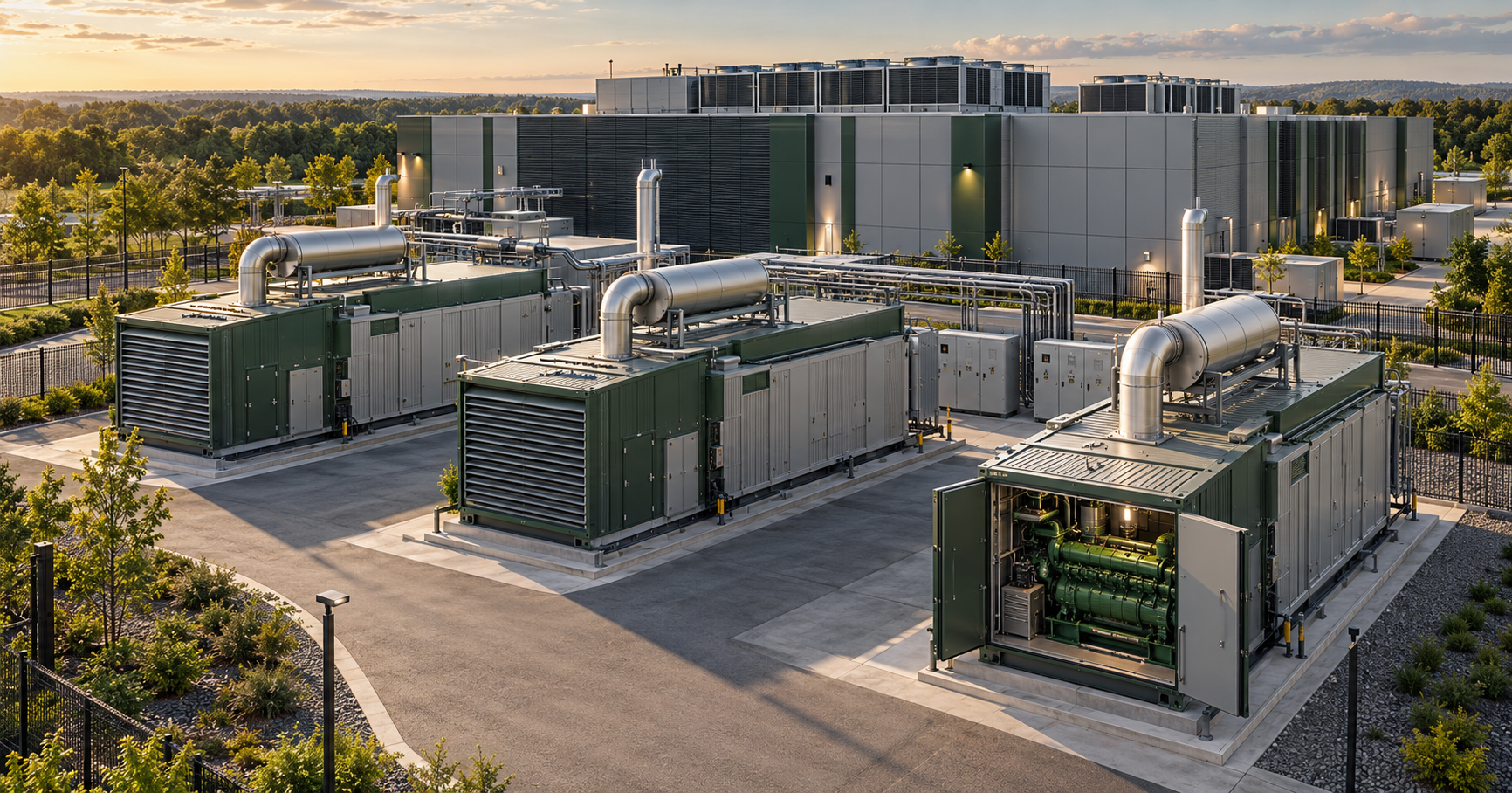
INNIO’s October 27 results show its data-center expansion beginning to improve equipment profitability. Third-quarter revenue increased 57% to $1.168 billion from $742.7 million a year earlier, while adjusted EBITDA rose 70% to $245.4 million. More equipment is reaching customers, and a larger proportion of revenue is becoming operating profit.
The economic opportunity extends beyond the initial engine sale. Maintenance, replacement parts and overhauls can generate revenue throughout an engine’s operating life. Customer payments received ahead of delivery also support the manufacturing ramp, giving INNIO funding before it completes the associated work. Together, these mechanisms strengthen its ability to expand, provided deliveries remain profitable and installed engines generate continuing service demand. All financial amounts below are U.S. dollars.
Equipment sales establish a longer service relationship
INNIO (Nasdaq: INIO) manufactures and services gas engines under the Jenbacher and Waukesha brands. Its equipment supplies electricity to data centers, industrial facilities and power networks, and drives compressors used in natural-gas infrastructure. These activities sit within its Equipment segment; Services is the other reportable segment.
For a data-center operator, on-site engines can supply routine operating electricity through a local installation behind the utility meter. Modular units allow capacity to be added as a campus grows. INNIO earns revenue from supplying the equipment and subsequently providing parts, field service, repairs and major overhauls.
The third-quarter presentation distinguishes two service models: customers can purchase individual parts and service visits, or enter multiyear agreements covering an agreed scope. Reliability requirements and engine-specific components support continuing demand. The revenue captured from a particular installation will nevertheless depend on operating hours, maintenance requirements and the service work INNIO retains.
That distinction affects the value of the current delivery surge. Engines used extensively for routine power generation can require more maintenance than equipment held mainly for occasional use. The long-term earnings opportunity therefore depends on how customers operate the installed fleet, alongside the number of engines sold.
Data centers drive growth while equipment margins recover
The latest segment results show a sharp increase in equipment sales and a smaller, higher-margin service business.
| Measure | Q3 2025 | Q3 2026 |
|---|---|---|
| Equipment revenue | $417.4m | $777.6m |
| Equipment adjusted segment EBITDA margin | 15.7% | 17.1% |
| Services revenue | $325.3m | $390.3m |
| Services adjusted segment EBITDA margin | 27.7% | 31.7% |
Services produced $123.7 million of adjusted segment EBITDA, close to Equipment’s $132.8 million despite generating roughly half its revenue. After $11.1 million of unallocated corporate costs, consolidated adjusted EBITDA was $245.4 million. The service relationship consequently has considerable earnings value even when equipment deliveries dominate headline growth.
The expansion is concentrated in data centers. The presentation reports quarterly data-center equipment revenue of approximately $463 million, compared with $38 million a year earlier, bringing the application to about 60% of Equipment revenue. Other power-equipment revenue declined to approximately $239 million from $327 million, while compression equipment increased to $75 million from $52 million. These are applications within Equipment, separate from the Services segment.
Higher output is also helping absorb the cost base. Equipment’s adjusted margin recovered from 13.8% in Q2 to 17.1% in Q3. The improvement supports a stronger assessment of the manufacturing ramp, although nine-month consolidated adjusted EBITDA margin remained below the comparable 2025 period, at 19.5% against 21.2%.
Adjusted EBITDA excludes interest, tax, depreciation, amortization and specified management adjustments. Reported net income was $109.2 million for Q3, compared with $39.5 million a year earlier. Nine-month net income remained lower, partly reflecting $93.6 million of IPO and public-market-readiness costs.
Recent contracts connect the backlog with future maintenance
An October 22 announcement illustrates the commercial connection between equipment and services. An unnamed U.S. data-center customer ordered another 620 megawatts of containerized Jenbacher equipment, taking its cumulative orders to approximately 1.72 gigawatts. The follow-on equipment order was booked in September and is therefore already reflected in third-quarter order intake.
The same customer signed a long-term maintenance agreement covering the first 500 megawatts of previously ordered capacity. It includes spare parts and labor through a major overhaul, extending the service relationship into a second engine lifecycle. This provides a concrete example of equipment demand leading to contracted follow-on work, although the announcement does not disclose the agreement’s revenue or profit value.
Demand also comes through intermediaries that operate fleets for multiple end customers. INNIO’s extended Aggreko agreement runs through 2031 and includes at least 450 megawatts of engine capacity in 2027, alongside a multiyear service agreement for the existing fleet.
These arrangements provide capacity visibility and customer access. Their eventual contribution to shareholder returns will depend on delivery costs, contract profitability and subsequent service activity. Capacity commitments alone do not establish the lifetime earnings from an installation.
Advance payments support expansion but carry delivery obligations
The cash-flow statement shows nine-month operating cash flow of $741.5 million, compared with $309.4 million a year earlier. After $199.1 million of property, plant, equipment and intangible investment, $542.4 million remained before acquisitions. The comparable prior-year amount was $227.8 million.
Customer payments ahead of revenue recognition explain much of that strength. Contract liabilities contributed $797.0 million to nine-month operating cash flow, against $344.7 million in 2025. INNIO’s June filing explains that these liabilities increase when collections precede satisfaction of the related contractual obligations.
That timing helps fund production. Suppliers and employees must be paid while equipment is being manufactured, whereas customer advances arrive before the associated revenue is fully earned. During the first nine months, inventory absorbed $484.6 million of cash, while higher accounts payable supplied $283.9 million. Advance collections and supplier payment timing therefore helped finance a much larger manufacturing operation.
The benefit is reduced dependence on borrowing to carry work in progress. It also means cash receipts and accounting earnings follow different schedules: INNIO must still incur costs to complete work for which it has already received payment. Slower collections or further inventory accumulation would increase the funding needed to sustain the ramp.
Capacity spending is rising alongside this working-capital requirement. In August, INNIO announced plans to invest more than $300 million over the coming years at Waukesha, including new engine assembly capabilities and an advanced testing facility. Additional capacity can support deliveries and shorten lead times, but requires spending before the resulting equipment generates revenue.
Cash nevertheless increased by $506.3 million from December to $1.196 billion at September 30, after acquisition spending, financing and currency movements. The presentation shows net indebtedness of approximately $1.415 billion and net leverage of 2.1 times trailing-12-month adjusted EBITDA, down from 3.6 times at December 2025. Both cash accumulation and earnings growth contributed to that improvement.
Management’s financial policy targets net leverage below two times over the medium term and prioritizes reinvestment and debt reduction. Near-term cash dividends are not planned, leaving shareholder returns dependent primarily on the earnings and cash ultimately generated by the expansion.
The higher outlook requires sustaining the recent operating level
Management raised revenue guidance by $100 million and adjusted EBITDA guidance by $60 million compared with its July outlook.
| Full-year measure, $m | July 28 guidance | October 27 guidance | Implied Q4 requirement |
|---|---|---|---|
| Revenue | 3,800–3,900 | 3,900–4,000 | 1,125.8–1,225.8 |
| Adjusted EBITDA | 720–740 | 780–800 | 239.8–259.8 |
At the midpoint, the remaining requirement is approximately $1.176 billion of revenue and $249.8 million of adjusted EBITDA. Those figures are close to Q3’s $1.168 billion and $245.4 million. The revised outlook consequently depends mainly on sustaining the latest operating level, with continued conversion of orders into deliveries.
The quarter strengthens the economic case for INNIO’s expansion: equipment margins are recovering, services contribute disproportionately to profit, and advance collections support production funding. The remaining dependency is the return earned on the larger manufacturing and installed-equipment base.
Sustaining equipment profitability around the latest level would support the revised annual outlook. Over a longer period, extensive engine use and maintenance work retained by INNIO would increase the earnings captured from today’s deliveries. Lower utilization, weaker service capture or production costs that outpace sales would reduce that benefit and leave more capital tied up in the expansion.
This material is provided for informational and educational purposes only and does not constitute investment advice or a recommendation to buy or sell any security.
Companies Discussed
About AER Insights
Alliance Equity Research publishes timely insights on company-specific developments, industry trends, capital markets activity, and emerging investment themes across global public markets, with a particular focus on undercovered companies, sectors, and developments that often receive limited attention from mainstream financial research. Our analysis focuses on the financial, strategic, and valuation implications behind the headlines, using company disclosures, filings, market data, and sector context to help investors understand what matters, why it matters, and what to watch next.
Get AER Insights by Email
Receive new AER Insights and research updates in your inbox.
Related Insights
 Biotechnology & Healthcare
Tango Targets First-Line Pancreatic Cancer as Larger Combination Data Support Phase 3
Tango’s larger pancreatic-cancer dataset supports further investment in its oral drug combination. A planned first-line trial would expand the clinical and commercial opportunity, while research cuts concentrate resources on PRMT5 medicines. Drug supply, dose tolerability and evidence of added benefit will determine how effectively its capital supports development.
 Capital Markets & M&A
Logan’s Ovintiv Deal Pairs a Montney Cash Exit With New Heavy-Oil Development
Logan shareholders would receive C$1.40 per share in cash and an interest in a new heavy-oil company. Logan Oil’s planned C$120 million financing would leave C$50 million after Woodcote’s cash purchase price, before fees and other spending. Its development capacity will depend on operating cash generation and Sawn Lake’s capital requirements.
 Industrials & Aerospace
GE Aerospace Raises Its Outlook as Maintenance Growth Supports Commercial Earnings
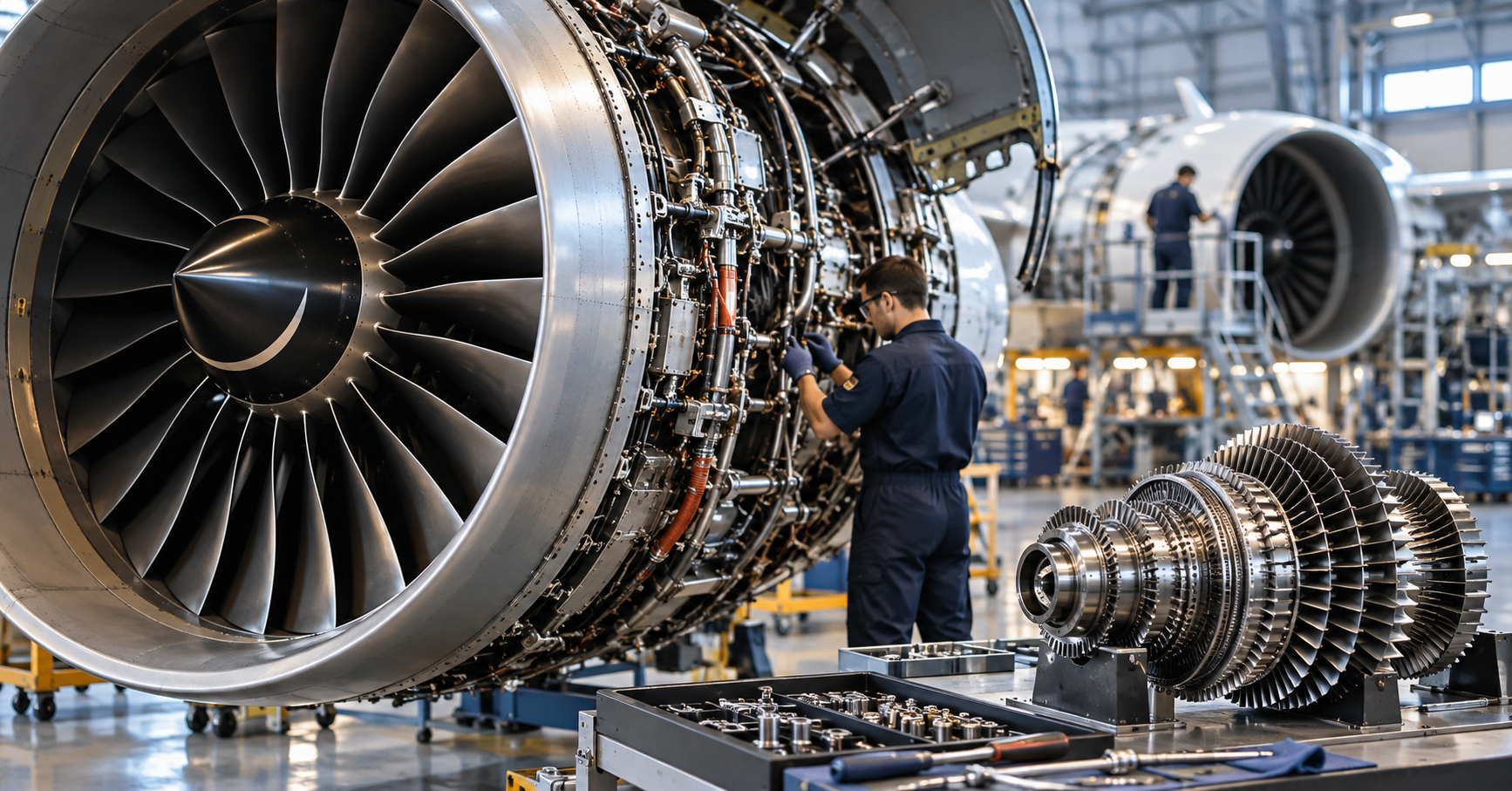
GE Aerospace’s higher annual guidance reflects stronger commercial services growth and a smaller expected GE9X earnings impact. Maintenance volume and pricing lifted commercial profit at a broadly stable margin. The remaining cash target implies faster year-over-year growth than GE delivered in the first nine months.
 Industrials & Aerospace
Schneider’s Data-Center Growth Supports a Software Expansion With Demanding Acquisition Economics
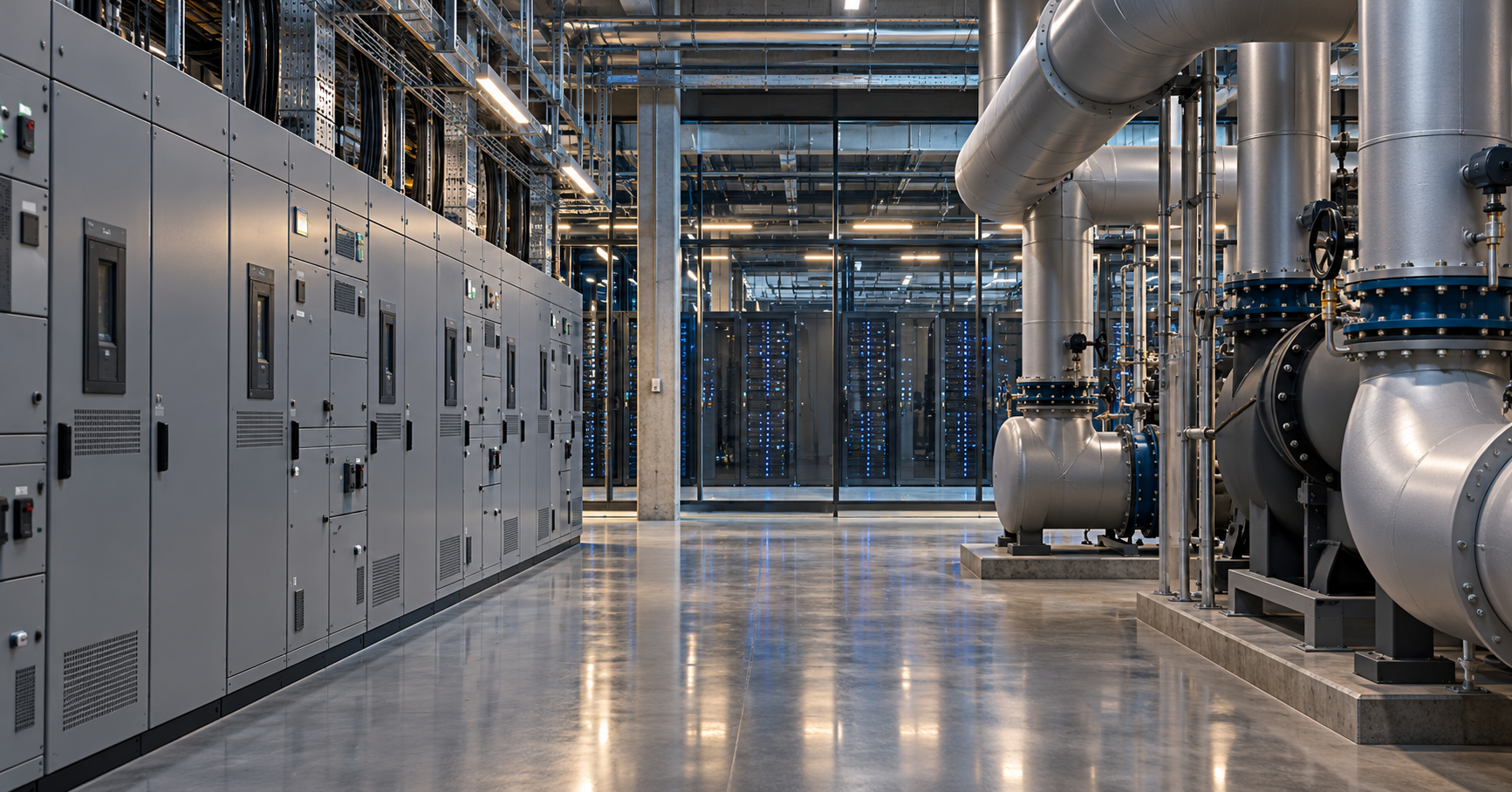
Schneider Electric has raised its outlook again as demand for data-center power and cooling equipment strengthens. Its proposed PTC acquisition would extend the business into product engineering software, but the purchase economics depend on earnings benefits that exceed the identified cost savings.
About Alliance Equity Research
Alliance Equity Research publishes independent and company-sponsored equity research on undercovered, emerging, and high-potential public companies globally. Our analyst-built, model-backed research combines fundamental business analysis, financial forecasting, and valuation.
Email: info@alliancekp.com · Website: https://allianceequityresearch.com
For detailed company research, financial models, or coverage inquiries, contact our research team.
Research commentary for informational purposes. This document does not constitute personalized investment advice or a Buy, Hold, or Sell recommendation. For important disclosures, including information about research sponsorship and potential conflicts of interest, visit allianceequityresearch.com/disclosures.