 Alliance Equity Research
Sensient’s Color Growth Raises Earnings as Natural-Color Expansion Absorbs More Cash
Sensient’s Color Group increased third-quarter sales 18.1% and operating profit 22.0% as food manufacturers reformulated products. Its formulation expertise and botanical supply network support natural-color adoption, while inventory and factory expansion are increasing cash requirements. Across the company, nine-month operating cash flow fell below capital expenditure, and borrowing increased. Color’s stronger margins demonstrate an earnings contribution from higher volumes. The expansion’s financial progress will depend on maintaining that profitability as new capacity enters service and converting more sales into cash to support continued investment.


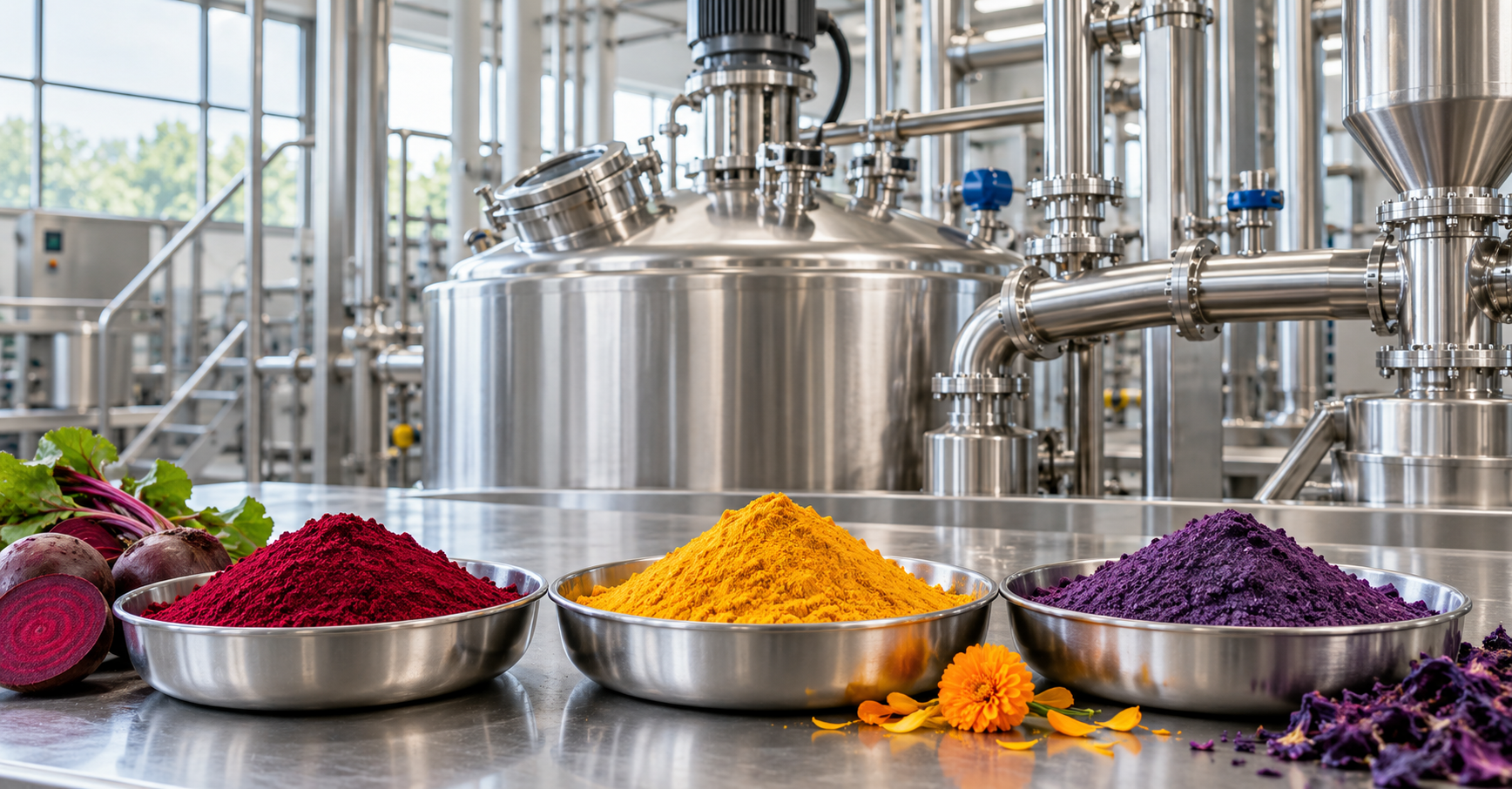
Sensient Technologies’ October 30 results show food-color demand contributing to higher earnings. Third-quarter Color Group sales rose 18.1% to $210.3 million, driven primarily by volume, while segment operating profit increased 22.0% to $46.1 million. Across Sensient, cash invested in inventory and manufacturing capacity increased alongside borrowing.
The business behind natural colors
Sensient (NYSE: SXT) supplies ingredients to food, beverage, pharmaceutical and personal-care manufacturers. Its customers buy formulations that deliver characteristics such as color, flavor or aroma in finished products. These ingredients must work within customers’ recipes, processing conditions and storage requirements.
Sensient reports two product-based segments, Flavors & Extracts and Color, alongside a geographically managed Asia Pacific segment selling colors, flavors and essential oils. Color includes natural and synthetic food and pharmaceutical colors, personal-care products and industrial applications. Its reported growth therefore captures a broader product mix than food manufacturers’ conversion to natural colors.
Color and Flavors & Extracts each generated approximately $210 million of third-quarter revenue, with Asia Pacific adding $47 million. After intersegment eliminations, consolidated sales were $455.8 million. Color contributed approximately 74% of the $43.7 million year-over-year increase in group sales, making it the largest source of growth.
What manufacturers need from natural colors
Replacing a synthetic dye involves matching shade and maintaining performance through production and the product’s shelf life. Botanical colors can respond differently to heat, light and acidity. Sensient’s technical guidance describes formulation changes and adjustments to the order of ingredient addition that may be needed when moving from laboratory samples to commercial production.
Application expertise helps manufacturers maintain the desired appearance through baking, pasteurization and storage. Sensient describes technologies that improve beet-red heat stability and stabilize spirulina-based blues. Solving those formulation problems can help its ingredients reach commercial production and generate repeat orders.
Natural colors may require higher usage rates, refrigerated storage or a different delivery format. A manufacturer may consequently buy more coloring material to produce the same quantity of finished food. For Sensient, conversion can increase revenue per customer product, while botanical sourcing, processing and handling requirements also raise the cost of serving that demand.
Regulation is bringing some reformulation work forward. FDA lists January 15, 2027, as the food reformulation deadline for Red No. 3, with an ingested-drug deadline of January 18, 2028. Its industry tracker also records voluntary commitments with different product coverage and timelines. These create several adoption schedules, with Sensient’s orders depending on customer launches and its selection as a supplier.
Color’s growth lifts operating profit
Color’s operating profit rose from $37.7 million to $46.1 million as revenue increased from $178.2 million to $210.3 million. Calculated from unrounded results, its operating margin improved to 21.9% from 21.2%. Profit growing faster than sales indicates that the additional volume improved segment profitability. The quarterly presentation attributes operating leverage primarily to Food & Pharmaceutical Colors volume growth and reports a 40-basis-point increase in adjusted EBITDA margin to 25.1%.
Group revenue increased 10.6% to $455.8 million, while operating income rose 25.5% to $72.4 million from $57.7 million. Prior-year operating income included $3.3 million of portfolio-optimization costs. Excluding those costs, operating profit grew 18.7%, or 18.6% after also removing currency effects. Flavors & Extracts and Asia Pacific both generated higher operating profit, contributing to the improvement alongside Color.
Color’s local-currency sales growth was 17.0%, compared with 17.6% in the second quarter. The similar rates show sustained growth across the two quarters. First-half tariff-refund benefits, disclosed in the earlier quarterly filing, also need to be separated when assessing changes in profitability between periods.
Expansion increases cash requirements
Sensient announced in March that it expected to invest up to $250 million over the coming years in natural-color manufacturing capacity, supply chain and personnel. Project Prism in St. Louis forms part of that program. The company’s project update envisages construction continuing into 2027, with operations in the new space beginning as early as midyear.
The manufacturing program combines botanical sourcing, processing equipment and backup production across regions. Those investments support different stages of supply: crops must be secured ahead of processing, and finished ingredients must be available when customers begin production. The timing creates cash requirements before Sensient collects the resulting sales.
| Nine months ended September 30, USD millions | 2025 | 2026 |
|---|---|---|
| Operating cash flow | $83.3 | $75.3 |
| Purchases of property, plant and equipment | $57.8 | $105.8 |
| Operating cash less those purchases | $25.5 | −$30.5 |
Inventory and receivables absorbed $117.2 million and $71.2 million of cash during the first nine months, compared with $35.6 million and $19.7 million a year earlier. The combined cash use increased by $133.1 million. Higher earnings and cash inflows from supplier and other accrual balances offset much of that increase, leaving operating cash flow $7.9 million lower. These are group-wide working-capital movements; the release provides no separate natural-color cash-flow statement.
At September 30, total borrowings were $790.4 million and cash was $42.6 million. Net new borrowing during the nine months was $91.8 million, after $180.1 million of proceeds and $88.3 million of repayments. Operating cash flow of $75.3 million, net investing outflows of $104.3 million and net financing inflows of $35.0 million, including $52.3 million of dividends paid, left cash $6.1 million higher after a small currency effect.
Management reported net debt to credit-adjusted EBITDA of 2.3 times, unchanged from a year earlier. Higher earnings helped contain leverage as borrowing increased. The funding burden would ease if sales growth began releasing more cash from working capital, allowing a larger share of the manufacturing program to be financed internally.
Capital spending continues into year-end
The October presentation puts 2026 capital expenditure at approximately $160 million, within the previous $150 million–$170 million range. After $105.8 million spent through September, approximately $54 million remains for the fourth quarter. The annual budget covers all businesses. The multi-year natural-color program includes capital expenditure as well as supply-chain and personnel spending.
The annual GAAP earnings outlook narrowed to $4.15–$4.20 per share from $4.10–$4.20, raising the lower end by $0.05. After nine-month diluted EPS of $3.37, the range leaves approximately $0.78–$0.83 per share for the final quarter.
Sensient is already earning more from Color’s higher volumes, with the segment’s operating margin reaching 21.9%. Expansion now places a larger demand on cash: nine-month operating inflows fell $30.5 million short of capital expenditure, and further spending is planned. Sustained margins and customer launches would support the new capacity’s contribution. If inventory continues accumulating faster than cash collections, borrowing will remain a larger part of the expansion’s funding.
This material is provided for informational and educational purposes only and does not constitute investment advice or a recommendation to buy or sell any security.
Companies Discussed
About AER Insights
Alliance Equity Research publishes timely insights on company-specific developments, industry trends, capital markets activity, and emerging investment themes across global public markets, with a particular focus on undercovered companies, sectors, and developments that often receive limited attention from mainstream financial research. Our analysis focuses on the financial, strategic, and valuation implications behind the headlines, using company disclosures, filings, market data, and sector context to help investors understand what matters, why it matters, and what to watch next.
Get AER Insights by Email
Receive new AER Insights and research updates in your inbox.
Related Insights
 Industrials & Aerospace
Minerals Technologies’ Sales Growth Outruns Earnings as Pricing Recovery Remains Incomplete
Minerals Technologies’ industrial products are growing, but higher costs and delayed contract-price adjustments have reduced consumer-business margins. Its latest results make pricing recovery central to near-term earnings improvement. New calcium-metal and steel-waste technologies offer additional markets, with commercial development still at an early stage. Cash generation has strengthened, while proposed funding for legacy talc claims remains substantial. October’s refinancing extends debt maturity at a higher interest cost. The existing businesses’ profitability will determine how much cash the company can generate while developing those opportunities and addressing its obligations.
 Mining & Critical Minerals
US Lime’s Texas Kiln Nears Commissioning as Higher Costs Offset Revenue Growth
United States Lime & Minerals increased third-quarter revenue through higher prices and shipment volumes, while diesel costs and startup inefficiencies at its new Texas kiln reduced profit. Management expects final commissioning in the fourth quarter, when depreciation on the new equipment will begin. The company has ample cash to complete the project, but construction delays and early signs of slower Texas housing could limit demand for its output. Earnings improvement will require reliable production, lower unit costs and sufficient sales to earn a return on the investment.
 Biotechnology & Healthcare
INOVIO’s Voceryq Approval Shifts Attention to Patient Uptake, Competition and Launch Funding
INOVIO’s first approved DNA medicine offers a new approach to reducing airway surgery. Commercial adoption will depend on its treatment profile, reimbursement and competition, while management’s disclosed cash runway overlaps the planned launch quarter and continuing clinical obligations extend beyond it.
 Industrials & Aerospace
Aecon’s Record Backlog Strengthens Growth Visibility, With Contract Mix Shaping the Earnings Upside
Aecon’s C$14.6 billion backlog and stronger third-quarter margins support further growth in power and infrastructure construction. A shift toward variable-price and collaboratively developed contracts could improve earnings predictability, while unusually strong cash receipts help finance a C$320 million utility buyout.
About Alliance Equity Research
Alliance Equity Research publishes independent and company-sponsored equity research on undercovered, emerging, and high-potential public companies globally. Our analyst-built, model-backed research combines fundamental business analysis, financial forecasting, and valuation.
Email: info@alliancekp.com · Website: https://allianceequityresearch.com
For detailed company research, financial models, or coverage inquiries, contact our research team.
Research commentary for informational purposes. This document does not constitute personalized investment advice or a Buy, Hold, or Sell recommendation. For important disclosures, including information about research sponsorship and potential conflicts of interest, visit allianceequityresearch.com/disclosures.