 Alliance Equity Research
Orezone’s Record Gold Output Leaves Higher Grades Central to Its Annual Outlook
Orezone’s two mines delivered record third-quarter production, but reaching annual guidance still requires a stronger finish. Completed waste stripping supports access to better ore. The longer-term opportunity at Casa Berardi also depends on sustained development spending, with its preliminary mine plan showing a gradual production ramp.
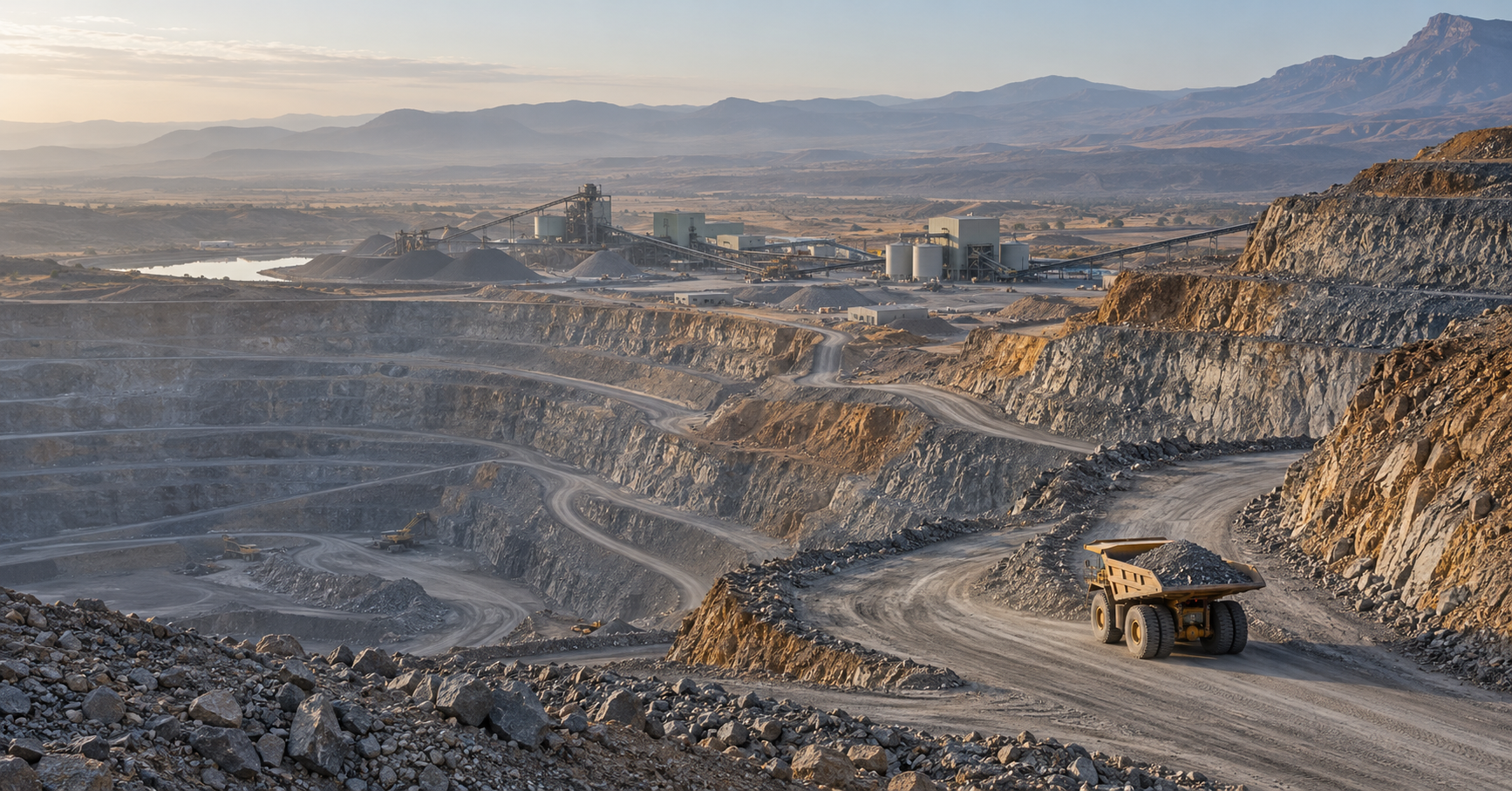
Record production still leaves a wide range of outcomes
Orezone Gold Corporation’s October 14 operating update reported record third-quarter gold production of 59,674 ounces and maintained its annual production guidance. AER’s reconciliation shows that reaching the bottom of that range requires fourth-quarter output approximately 9% above the latest record. Reaching the top requires approximately 51% more.
That spread changes the interpretation of the announcement. The lower end requires a further operating improvement; the upper end depends on a much larger contribution from better ore. Progress in removing waste rock supports management’s expectation of a stronger finish, but the economic benefit will emerge when higher-grade material reaches the processing plants.
The same dependency extends into Orezone’s Canadian expansion. Casa Berardi provides an operating mine and established infrastructure, while increasing its contribution requires investment in underground access, equipment and future open pits. Near-term production progress and the longer-term development opportunity therefore need to be assessed on different schedules.
Two mines with different operating requirements
Orezone Gold Corporation operates two gold mines: Bomboré in Burkina Faso and Casa Berardi in Quebec. It earns revenue by mining and processing ore into gold-bearing doré, which is refined and sold. Its economics depend on how much material it processes, the gold content of that material, recovery rates, metal prices and the expenditure required to maintain access to ore.
Orezone owns 85% of Bomboré, with Burkina Faso’s government holding a 15% free-carried interest. The mine combines a plant treating softer, weathered oxide ore with a newer circuit processing harder rock. These circuits broaden the material that can be processed, although harder rock requires more intensive treatment.
Casa Berardi is wholly owned and combines underground and open-pit mining. Orezone acquired it on March 25, 2026, so reported production under its ownership covers only the period since that date. The acquisition diversified the operating base geographically and added a mine where management is rebuilding underground development and equipment capacity.
Both operations currently have an important connection between mining activity and mill feed. Removing waste rock opens access to ore but does not immediately generate gold. Stockpiles can keep a plant running during that work, often with lower-grade material that produces fewer ounces for each tonne processed.
What annual guidance requires from the fourth quarter
The annual outlook combines a full year at Bomboré with Casa Berardi’s post-acquisition contribution. The following reconciliation uses the production targets reiterated in October and reported output through September:
| Gold production, ounces | 2026 guidance | Reported through September | Implied fourth quarter |
|---|---|---|---|
| Bomboré, 100% mine basis | 160,000–180,000 | 116,188 | 43,812–63,812 |
| Casa Berardi, from March 25 | 62,000–67,000 | 40,841 | 21,159–26,159 |
| Combined, 100% mine basis | 222,000–247,000 | 157,029 | 64,971–89,971 |
The operating evidence supports improvement. Orezone reported completion of Casa Berardi’s F160 waste-stripping program and improving access to higher-grade ore at Bomboré’s P17 pit. Those developments address the availability of better feed, which is central to the planned fourth-quarter increase.
Nevertheless, maintaining a wide annual range does not imply equal support for every point within it. The lower end is consistent with a more moderate recovery across the portfolio. Outcomes nearer the upper end require the benefits of improved access to arrive promptly and translate into materially greater gold production.
Better feed could improve costs as well as ounces
Bomboré’s earlier performance explains why grade recovery has financial value. In the second-quarter results, management attributed delayed access to higher-grade hard-rock ore partly to explosives shortages that began in late 2025. Three suppliers were subsequently engaged, and the revised mining sequence concentrated access to better P17 material toward year-end.
Higher grades can spread mining, processing and site overhead across more recovered ounces. However, the newer hard-rock operation also consumes more power, grinding media and reagents than the oxide operation. AER’s assessment is that grade improvement should support unit economics, while the changing ore mix limits how directly earlier oxide costs can be extrapolated.
The August capital update also distinguished two expansion steps. Stage 2A adds equipment intended to improve reliability and recovery, with commissioning then targeted for October. The larger Stage 2B capacity expansion remained under review. The October production announcement did not confirm completion of Stage 2A commissioning.
Capacity, feed availability and recovery therefore remain separate operating variables. Additional processing equipment can improve performance, but it cannot independently deliver the production outlook if access to the planned ore falls behind.
Casa Berardi’s cash contribution carries continuing investment obligations
Management’s July guidance for Casa Berardi explicitly described 2026 as a transition year. It projected US$37 million–US$39 million of sustaining capital for the post-acquisition period, covering underground development, mobile equipment, tailings facilities and plant improvements. Another US$5 million–US$6 million was allocated to growth capital.
These expenditures help create the inventory of accessible ore needed for future production. Strong plant performance can generate cash today, while development spending determines whether that performance can be sustained.
Acquisition funding also affects the cash retained from gold sales. The June management discussion describes a US$100 million upfront gold-stream payment received from Franco-Nevada. In exchange, Casa Berardi must deliver fixed quarterly quantities through 2030, followed by a percentage of production, receiving 20% of the spot gold price for delivered ounces. The stream supported the acquisition while committing part of future output at a discounted ongoing payment.
That structure makes retained cash generation dependent on more than total ounces produced. Production growth must be considered alongside stream deliveries, operating costs and the capital needed to develop subsequent mining areas.
The long-term plan starts with a gradual ramp
Casa Berardi’s September life-of-mine assessment projects an average of approximately 116,000 ounces annually over 2027–2040. Its early-year schedule is lower: approximately 85,000 ounces in 2027, 95,000 in 2028 and 106,000 in 2029. Planned capital expenditure totals approximately US$105 million and US$107 million in the first two years.
The headline average consequently describes a developed operation later in the schedule, not an immediate production rate. Rebuilding underground access and preparing future pits consumes capital before the higher-output years contribute.
The study announcement also classifies the plan as a preliminary economic assessment incorporating inferred resources, with no mineral reserves defined for Casa Berardi. Future pit expansions require additional permits. Its projected production and economics remain conditional on geological confidence, development progress and approvals.
Orezone’s next scheduled financial release is November 16. The most useful developments will be evidence that improved ore access is lifting recovered ounces, confirmation of processing-project progress and disclosure of the cash retained after ongoing investment. A fourth-quarter recovery toward the lower end would support the maintained annual outlook; stronger grades and sustained development progress would provide firmer support for the longer-term production profile.
This material is provided for informational and educational purposes only and does not constitute investment advice or a recommendation to buy or sell any security.
Companies Discussed
About AER Insights
Alliance Equity Research publishes timely insights on company-specific developments, industry trends, capital markets activity, and emerging investment themes across global public markets, with a particular focus on undercovered companies, sectors, and developments that often receive limited attention from mainstream financial research. Our analysis focuses on the financial, strategic, and valuation implications behind the headlines, using company disclosures, filings, market data, and sector context to help investors understand what matters, why it matters, and what to watch next.
Get AER Insights by Email
Receive new AER Insights and research updates in your inbox.
Related Insights
 Capital Markets & M&A
Silgan’s Trivium Deal Pairs a Cash Release With a Demanding Synergy Plan
Silgan’s proposed packaging combination would deliver $2.3 billion of cash while preserving control of the enlarged metal business. The structure creates financial flexibility, but the acquisition’s lower advertised multiple depends on savings equivalent to almost half of Trivium’s recent adjusted EBITDA.
 Biotechnology & Healthcare
EyePoint’s Second Wet-AMD Failure Shifts Its Funding Priorities to Diabetic Eye Disease
EyePoint is cutting its workforce after DURAVYU missed another pivotal vision endpoint. Its diabetic macular edema program remains active, but the earlier supporting study differs materially from the ongoing trials. The investment assessment now depends on stronger clinical evidence and a clearer funding plan.
 Mining & Critical Minerals
NioCorp’s Elk Creek Funding Case Extends Beyond Its New Ferroniobium Purchase Commitment
NioCorp has disclosed $405.1 million of cash and secured a longer ferroniobium purchase commitment. Financing its Nebraska project also depends on the commercial prospects of scandium, titanium and rare earths, which supply approximately 74% of modeled lifetime revenue and carry different sales arrangements.
 Mining & Critical Minerals
Atalaya’s Copper Recovery Improves as Fresh Equity Funds Its Next Growth Phase
Atalaya is extracting more copper from each tonne processed at Riotinto, supporting output without another large plant expansion. Its stronger balance sheet also reflects January’s equity raise and lower borrowings. Future returns depend on turning that funding into accessible ore and reliable processing performance.
About Alliance Equity Research
Alliance Equity Research publishes independent and company-sponsored equity research on undercovered, emerging, and high-potential public companies globally. Our analyst-built, model-backed research combines fundamental business analysis, financial forecasting, and valuation.
Email: info@alliancekp.com · Website: https://allianceequityresearch.com
For detailed company research, financial models, or coverage inquiries, contact our research team.
Research commentary for informational purposes. This document does not constitute personalized investment advice or a Buy, Hold, or Sell recommendation. For important disclosures, including information about research sponsorship and potential conflicts of interest, visit allianceequityresearch.com/disclosures.