 Alliance Equity Research
MasTec’s $1.25 Billion Murphy Deal Adds Maintenance Work That Outlasts Construction
MasTec agreed to pay approximately $1.25 billion in cash for Murphy, a mechanical contractor that installs and maintains systems in data centers, hospitals, factories and other facilities. Murphy’s projected $140 million of 2026 adjusted EBITDA implies an upfront price of about 8.9 times that figure, before a possible earnout. The acquisition adds skilled crews and gives MasTec a route to service work after construction ends. The price reflects earnings that have yet to be realized for the full year. The cash Murphy contributes after financing costs, equipment spending and working capital will help determine how quickly MasTec can reduce leverage.


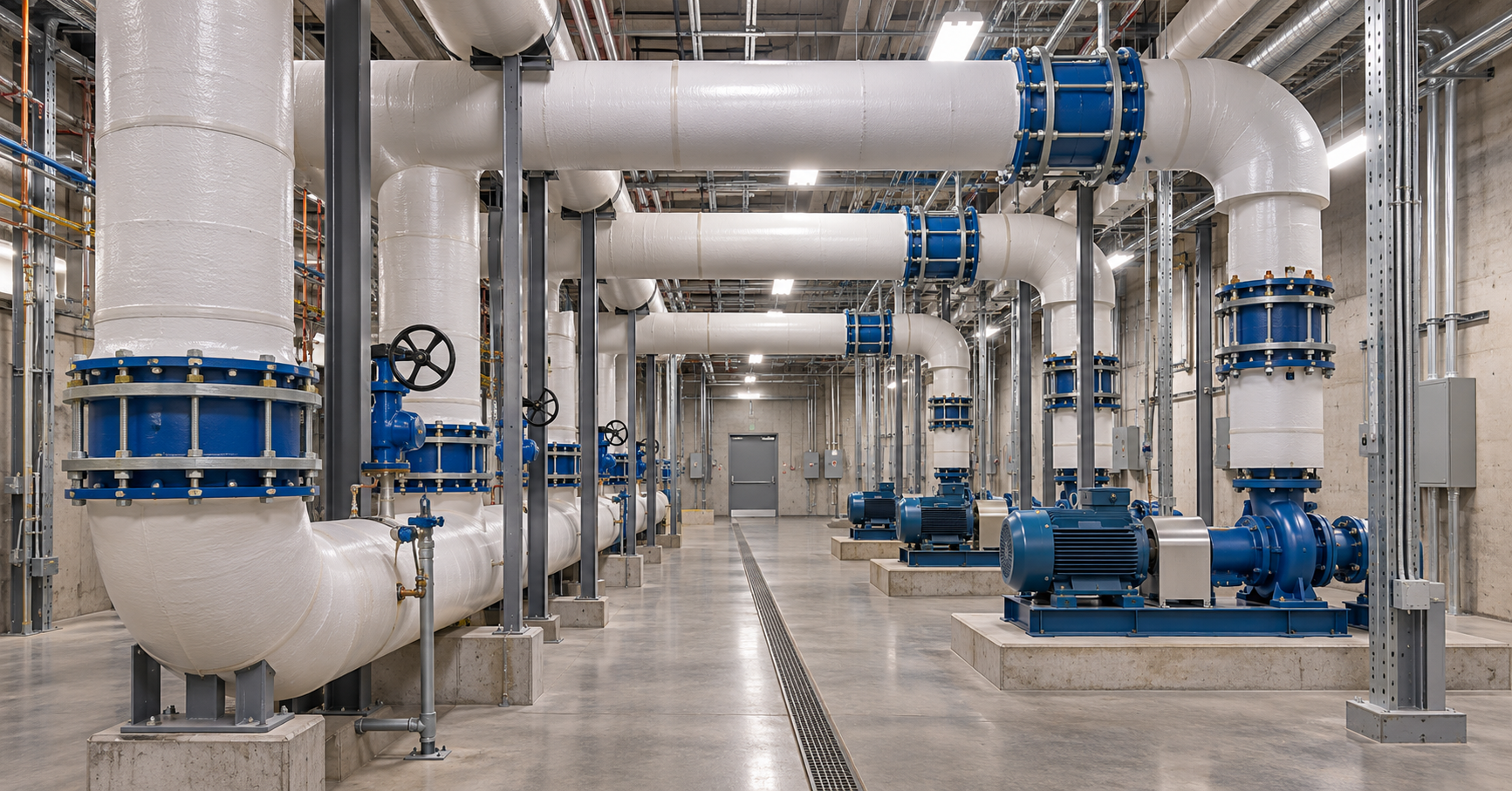
MasTec agreed on Nov. 20 to buy Murphy Corporation for about $1.25 billion in cash, subject to closing adjustments and a possible performance payment. The North American infrastructure contractor already builds electrical and civil systems for large facilities. Murphy adds the ability to install and maintain the mechanical systems that keep those facilities running. Its projected earnings are large enough to matter, but the cash available to service acquisition debt will depend on collections, equipment spending and how much maintenance work follows the initial installations.
Work that continues after construction
MasTec builds and services power lines, fiber networks, pipelines and other infrastructure. In July it acquired Superior, an electrical contractor whose work includes large-load installations for customers such as data-center developers. Murphy adds mechanical engineering and installation, including heating and cooling, plumbing and piping that carries fluids used in industrial processes. Its customers also include hospitals, pharmaceutical manufacturers and food processors. That range gives MasTec exposure to multiple sources of demand for construction and service work.
The acquisition brings about 1,200 union craft workers and an organization that can design, fabricate and install systems with its own crews. Fabricating pipe assemblies before they reach the job site can move labor away from congested work areas and reduce the number of tasks crews have to coordinate on site. For MasTec, acquiring that capacity in an established contractor gives it a way to bid for a wider scope of work and retain a greater share of the contract if it wins. Murphy’s existing leadership will remain in place, which gives customers continuity on complex jobs already in progress.
Murphy also has a service business that maintains heating and cooling systems, refrigeration, plumbing and controls. Equipment such as pumps and chillers needs regular attention even when owners postpone new construction. The company that installed the equipment already knows how the site is configured and has a relationship with the owner, which can help it win the work. MasTec describes the service business as substantial, but its release gives neither the share of Murphy’s earnings from service nor the duration of those customer commitments. The financial contribution from that opportunity depends on how much service revenue the combined business retains and adds as installations enter operation.
The price reflects a profitable contractor
MasTec projects Murphy’s calendar 2026 revenue and adjusted EBITDA at approximately $775 million and $140 million, respectively, for an implied margin of 18.1%. The upfront cash price is about 8.9 times forecast adjusted EBITDA. That ratio leaves out customary closing adjustments and the potential earnout to Murphy’s sellers, which depends on the business’s cumulative financial performance over three years. MasTec has disclosed neither the earnout formula nor a stand-alone reconciliation of Murphy’s forecast to GAAP earnings, which limits comparison with fully disclosed transactions.
The scale is more significant for Clean Energy and Infrastructure, where MasTec expects to report Murphy, than for the group as a whole. In the September quarter, the segment earned $149.3 million of EBITDA on $1.83 billion of revenue, compared with $115.4 million on $1.36 billion a year earlier. Margin dipped to 8.2% from 8.5% as job mix and weaker productivity on certain industrial projects offset part of the benefit of higher volumes. Murphy’s full-year forecast uses adjusted EBITDA and reflects a different mix of work. It indicates room for a higher-margin contribution while leaving the final segment margin dependent on project performance and the pace of service growth.
Across the group, Murphy’s forecast EBITDA is about 9% of the midpoint of MasTec’s October full-year adjusted EBITDA guidance of $1.565 billion to $1.600 billion. That compares two full-year figures to show scale. The contribution in MasTec’s 2026 accounts would cover only the period after closing. MasTec expects the deal to add to earnings per share and operating cash flow, and the amount shareholders ultimately retain will depend on interest, acquisition accounting, the cash needed to support projects and any earnout.
Another deal raises the importance of collections
At Sept. 30, MasTec reported total debt of $4.17 billion and cash of $482 million, leaving net debt of $3.69 billion. Net debt was $1.93 billion at the end of 2025. In the first nine months of 2026, MasTec spent $1.63 billion on acquisitions net of cash acquired, and about $229 million on capital expenditure net of disposals. Net investing outflow of $1.86 billion was covered mainly by $1.55 billion of net financing inflows and $388 million of operating cash flow. The Murphy deal adds another bank term loan. The announcement identifies the funding source and says substantially all closing conditions have been met. It gives no rate or maturity for the new borrowing.
MasTec reported net leverage of 2.5 times at Sept. 30 and estimates 2.7 times on a pro forma basis for the same date. Its reporting measure divides debt net of cash and deferred financing costs by trailing adjusted EBITDA. MasTec expects to get below 2.0 times during 2027. EBITDA growth can lower the ratio, while cash applied to repayments reduces the debt itself. On Nov. 5, MasTec also said it had $250 million available under its repurchase authorization as it paused talks on an unnamed acquisition. Repurchases are discretionary and would compete with faster debt repayment for cash.
Cash conversion after closing
MasTec’s operating cash flow rose to $388 million in the first nine months from $173 million a year earlier. The quarterly filing attributes the increase to higher earnings, favorable timing for payables and accrued expenses, and higher contract liabilities as projects started. Timing of receivables and slower collections absorbed part of the gain. As large projects ramp up, MasTec can have to pay crews and suppliers before customers pay for the work. Some contracts also allow customers to withhold a portion of billings until completion. After capital expenditures net of disposals, MasTec generated about $159 million of free cash flow in the first nine months, up from about $36 million a year earlier. The improvement provides a stronger starting point for debt repayment, while the difference between operating cash flow and free cash flow shows how much equipment investment absorbed.
Contract terms will also determine how much of the extra work reaches cash flow. On a fixed-price installation, a contractor can absorb costs when a job requires more hours than estimated. Maintenance can make revenue less dependent on the start dates of major projects, although the expected benefit depends on contract terms and the mix of scheduled servicing and one-off repair work. As AER’s analysis of Aecon’s backlog also illustrates, the amount of work tells investors less about earnings than the terms on which it is undertaken. The strongest evidence in 2027 would be a decline in net debt alongside the profitable completion of large construction projects and growth in owner-direct maintenance. If leverage falls mainly because EBITDA expands while net debt holds steady, MasTec will have made less progress in freeing cash for future investment.
This material is provided for informational and educational purposes only and does not constitute investment advice or a recommendation to buy or sell any security.
Companies Discussed
About AER Insights
Alliance Equity Research publishes timely insights on company-specific developments, industry trends, capital markets activity, and emerging investment themes across global public markets, with a particular focus on undercovered companies, sectors, and developments that often receive limited attention from mainstream financial research. Our analysis focuses on the financial, strategic, and valuation implications behind the headlines, using company disclosures, filings, market data, and sector context to help investors understand what matters, why it matters, and what to watch next.
Get AER Insights by Email
Receive new AER Insights and research updates in your inbox.
Related Insights
 Market Commentary
More Shopping Trips Lift Target’s Earnings as Tariff Refunds Raise Its Outlook
Target’s third-quarter comparable sales rose 5.6%, driven mainly by more transactions. Gross margin improved even after removing $301 million of tariff refunds, although higher store labor and other costs absorbed some of the gain. The retailer raised its full-year earnings outlook, but most of the increase in the midpoint reflects refunds already recognized. The distinction matters as Target prepares to spend $5 billion to $6 billion on capital projects in 2027. Holiday traffic, markdowns and cash tied up in merchandise will help show how much of the improvement can carry forward.
 Biotechnology & Healthcare
SELLAS Reports a Survival Benefit in AML as Its Cancer Vaccine Approaches FDA Review
SELLAS Life Sciences reported that its investigational cancer vaccine met the overall-survival endpoint in a Phase 3 trial of patients with acute myeloid leukemia who had reached a second or later remission and could not undergo a donor stem cell transplant. Median survival was 24.0 months with galinpepimut-S versus 14.7 months with investigator-selected care. The result provides a basis for a planned FDA discussion, while detailed control-arm, safety and secondary-endpoint data remain important to interpretation. SELLAS ended September with $134.7 million in cash after substantial warrant exercises.
 Industrials & Aerospace
AdvanSix’s Rising Sales Mask Weaker Earnings as Ammonia Expansion Advances
AdvanSix reported higher third-quarter sales as it passed through rising raw-material costs, but lower production and input inflation reduced earnings. The U.S. manufacturer supplies nylon materials, fertilizers and industrial chemicals through an integrated network. Quarterly cash flow improved with help from working-capital movements, while free cash flow remained negative for the first nine months. A proposed federal grant could support a multiyear ammonia expansion. The company’s near-term cash position depends on customer advances, spending and operating performance, while the expansion remains subject to federal review.
 Industrials & Aerospace
Minerals Technologies’ Sales Growth Outruns Earnings as Pricing Recovery Remains Incomplete
Minerals Technologies’ industrial products are growing, but higher costs and delayed contract-price adjustments have reduced consumer-business margins. Its latest results make pricing recovery central to near-term earnings improvement. New calcium-metal and steel-waste technologies offer additional markets, with commercial development still at an early stage. Cash generation has strengthened, while proposed funding for legacy talc claims remains substantial. October’s refinancing extends debt maturity at a higher interest cost. The existing businesses’ profitability will determine how much cash the company can generate while developing those opportunities and addressing its obligations.
About Alliance Equity Research
Alliance Equity Research publishes independent and company-sponsored equity research on undercovered, emerging, and high-potential public companies globally. Our analyst-built, model-backed research combines fundamental business analysis, financial forecasting, and valuation.
Email: info@alliancekp.com · Website: https://allianceequityresearch.com
For detailed company research, financial models, or coverage inquiries, contact our research team.
Research commentary for informational purposes. This document does not constitute personalized investment advice or a Buy, Hold, or Sell recommendation. For important disclosures, including information about research sponsorship and potential conflicts of interest, visit allianceequityresearch.com/disclosures.