 Alliance Equity Research
AXT’s Wafer Sales Surge as Subsidiary Financing Adds Capacity and Shares Future Earnings
AXT’s third-quarter sales more than doubled from a year earlier as demand for indium phosphide wafers used in optical communications accelerated. Higher volumes and a richer product mix helped lift gross margin to 56%. The company is expanding capacity through its Chinese subsidiary Tongmei, where a proposed outside investment would bring in capital but reduce AXT’s ownership. Export permits, the timing of customer deliveries and the terms attached to subsidiary funding will influence how much of the manufacturing growth ultimately benefits AXT shareholders.

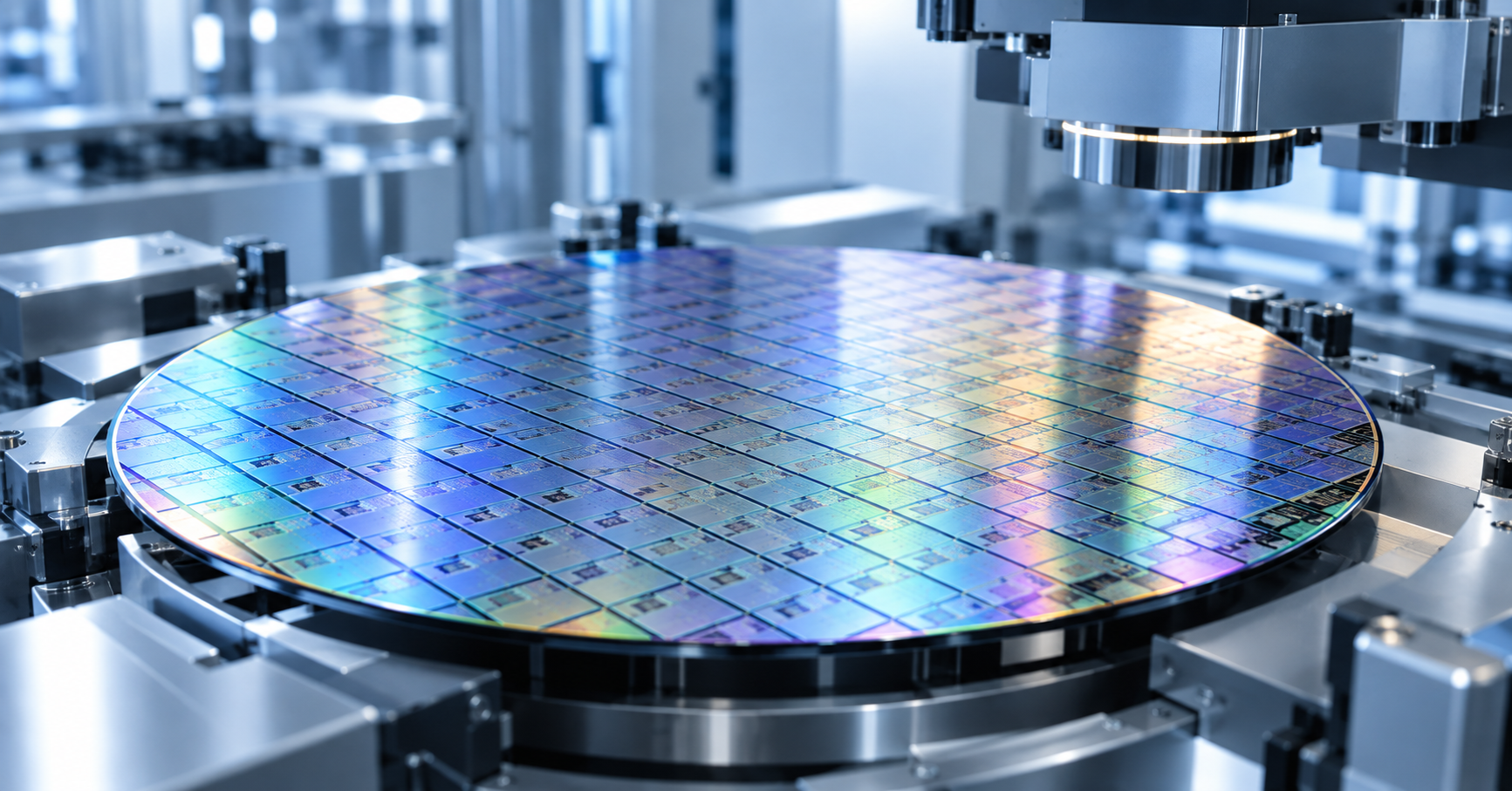
AXT’s indium phosphide business is growing quickly as customers buy more material for the optical components that move data through networks. The wafer maker reported third-quarter revenue of $73.4 million, up from $28.0 million a year earlier, and turned a prior-year operating loss into a $28.4 million profit.
The company is now preparing a larger manufacturing expansion through its Chinese subsidiary, Beijing Tongmei Xtal Technology. AXT has agreed to invest $400 million in Tongmei, alongside a proposed $285 million–$545 million from outside investors. The arrangement would provide capital for expansion while giving those investors a share of the subsidiary’s future earnings and certain redemption rights.
For AXT shareholders, the opportunity lies in supplying more of a market that is already contributing to earnings. The financial result will also depend on export approvals, manufacturing performance and the portion of Tongmei ultimately retained by AXT.
All dollar amounts are U.S. dollars unless otherwise stated.
A material used to move data
AXT manufactures semiconductor substrates, the wafers on which customers build electronic and optical devices. Its products include indium phosphide, gallium arsenide and germanium. These materials serve applications where a conventional silicon substrate may not provide the required properties. AXT is headquartered in California and manufactures at three locations in China.
Indium phosphide is used in devices such as lasers and detectors that help transmit data using light. As data centers install faster connections between equipment, manufacturers of optical components need suitable substrate material. AXT supplies a manufacturing input several steps upstream from the finished data-center network.
The company reported $54.3 million of indium phosphide revenue in the third quarter, primarily from data-center applications. That represented approximately 74% of total revenue. Gallium arsenide contributed $9.1 million, germanium substrates $0.3 million and consolidated raw-material companies $9.7 million.
The concentration helps explain both the recent earnings improvement and AXT’s exposure to the market for optical components. Management said its five largest customers accounted for approximately 35% of quarterly revenue, with one customer above 10%. Continued growth depends on customers’ purchasing plans as well as AXT’s capacity to supply them.
Higher volumes lift factory margins
The increase in revenue has been accompanied by a sharp improvement in profitability.
| $ million, except margins | Q3 2025 | Q2 2026 | Q3 2026 |
|---|---|---|---|
| Revenue | 28.0 | 47.6 | 73.4 |
| GAAP gross margin | 22.3% | 44.9% | 56.0% |
| GAAP operating profit/(loss) | (1.1) | 10.4 | 28.4 |
| Net income/(loss) attributable to AXT | (1.9) | 11.1 | 25.7 |
Third-quarter gross profit reached $41.1 million, compared with $6.2 million a year earlier. After $12.7 million of operating expenses, AXT reported $28.4 million of operating profit. The increase in gross profit was large enough to absorb higher spending on administration and research and development.
Management attributed the margin improvement to higher volume, a favorable product mix, higher indium phosphide prices and a shift from three-inch to four-inch wafers. Larger wafers carry higher selling prices and offer customers more usable surface area, although manufacturing economics also depend on yield and processing costs.
Below operating profit, AXT recorded $5.9 million of net interest income and a $4.6 million tax provision. The consolidated company earned $29.8 million, of which $4.0 million was attributable to noncontrolling interests. Income attributable to AXT was therefore $25.7 million, or $0.39 per diluted share. The company’s non-GAAP figure, which excludes stock compensation, was $26.8 million, or $0.41 per share.
The noncontrolling-interest deduction is relevant because AXT already shares ownership of consolidated businesses. Additional outside investment in Tongmei would increase the importance of distinguishing consolidated results from earnings attributable to AXT.
Capacity is growing, but permits affect deliveries
Management said AXT exceeded its original goal of doubling indium phosphide capacity during August. It is also designing the conversion of an adjacent building for additional production. New furnace designs and larger-diameter wafers are intended to increase output, while six-inch wafer lines are moving into pilot production.
The expansion gives AXT more room to meet orders, but usable output depends on manufacturing yield: a larger wafer has value only if it meets customers’ specifications. Management expects initial yields on six-inch production to be lower as the line ramps.
Management reported backlog above $500 million, including multiyear agreements, shorter contracts and spot orders. That figure spans different delivery periods and should be read alongside production capacity rather than as revenue for a single year.
Export permissions add another constraint. AXT’s June 2026 filing explains that the timing of Chinese export permits can create a mismatch between orders and recognized revenue. Management said shipments within China do not require an export license, giving the company a domestic market for some production.
For the fourth quarter, management identified approximately $90 million of revenue across substrates and raw materials that it said could be realized from business already permitted for shipment or not requiring a permit. That amount is about 23% above third-quarter revenue. Management also guided to GAAP earnings of $0.56–$0.58 per diluted share and non-GAAP earnings of $0.57–$0.59.
Customer prepayments support cash
AXT reported $825.9 million of cash and investments at September 30, including $41.2 million of restricted cash, up from $748.8 million at June 30. The increase includes support from customers paying before wafers are delivered. Management said AXT received a $43.5 million prepayment under a long-term supply agreement with Lumentum.
That payment is recorded as a liability and becomes revenue as products are shipped against the agreement. It provides cash ahead of deliveries, while committing AXT to supply wafers for which it has already collected payment. Management also said multiple customer prepayments contributed to lower days sales outstanding during the quarter.
The cash balance provides an important starting point for AXT’s proposed investment in Tongmei. It should not be treated as entirely new cash generated by the third quarter’s earnings: customer advances are one contributor, and the company had also raised equity capital earlier in the year.
Tongmei’s financing shares the expansion
Under the October 27 agreements, institutional investors would buy between approximately $285 million and $545 million of Tongmei ordinary shares. AXT separately agreed to subscribe for the equivalent of $400 million in Tongmei shares on or before the transaction closes.
The two commitments have different effects. AXT’s contribution moves capital from the parent into its consolidated subsidiary; it does not create an equivalent inflow of new capital for the consolidated group. The outside investors’ subscription would bring new funds into Tongmei in exchange for ownership. The planned uses include indium phosphide capacity, other business expansion, capital expenditure and working capital.
At the maximum outside investment, AXT expects to retain approximately 73.4% of Tongmei and continue consolidating it. On the earnings call, management described that as a reduction of approximately 12.1 percentage points. The final ownership outcome depends on the amount invested and completion of the transaction.
The financing is subject to conditions, including required governmental filings. If the minimum investment has not closed by December 20, the agreement terminates, although the parties have agreed to consider an extension if approvals remain pending. AXT has not established that the full $545 million will be invested.
The new investors would receive priority on Tongmei profit distributions and a liquidation preference. They also have a right to require Tongmei to redeem their shares in specified circumstances, including if a qualifying initial public offering has not occurred within three years of closing. The disclosed redemption price includes the subscription price and an 8% annual compounded return, plus any declared or accrued unpaid distributions.
These terms give Tongmei access to outside capital for a substantial expansion, while placing conditions around the investors’ eventual exit. They also make a future listing relevant to the financing, although a qualifying IPO requires a specified return to the investors and is not assured.
AXT’s near-term operating focus is converting its expanding wafer capacity into deliveries at the margins achieved in the third quarter. Over a longer period, the amount of Tongmei capital raised, the ownership retained and any redemption obligations will determine how much of the subsidiary’s growth accrues to AXT shareholders.
This material is provided for informational and educational purposes only and does not constitute investment advice or a recommendation to buy or sell any security.
Companies Discussed
About AER Insights
Alliance Equity Research publishes timely insights on company-specific developments, industry trends, capital markets activity, and emerging investment themes across global public markets, with a particular focus on undercovered companies, sectors, and developments that often receive limited attention from mainstream financial research. Our analysis focuses on the financial, strategic, and valuation implications behind the headlines, using company disclosures, filings, market data, and sector context to help investors understand what matters, why it matters, and what to watch next.
Get AER Insights by Email
Receive new AER Insights and research updates in your inbox.
Related Insights
 Mining & Critical Minerals
Asante Gold Needs New Funding as Bibiani’s Recovery Takes Shape
Asante Gold has until November 30 to secure at least $100 million in new funding under an agreement with its lenders. As the company negotiates, its mines must generate enough cash to support investment and financing costs. Higher-grade ore at Bibiani could improve production, but the recovery depends on execution and the terms of the financing.
 Industrials & Aerospace
Minerals Technologies’ Sales Growth Outruns Earnings as Pricing Recovery Remains Incomplete
Minerals Technologies’ industrial products are growing, but higher costs and delayed contract-price adjustments have reduced consumer-business margins. Its latest results make pricing recovery central to near-term earnings improvement. New calcium-metal and steel-waste technologies offer additional markets, with commercial development still at an early stage. Cash generation has strengthened, while proposed funding for legacy talc claims remains substantial. October’s refinancing extends debt maturity at a higher interest cost. The existing businesses’ profitability will determine how much cash the company can generate while developing those opportunities and addressing its obligations.
 Technology & Semiconductors
Bel Fuse’s Data Business Drives Sales Growth and Higher Manufacturing Margins
Bel Fuse’s data-related products are lifting sales and factory margins, with growth extending beyond its identifiable AI customers. Fourth-quarter guidance supports continued demand, while a larger share count, Enercon’s minority-interest valuation and inventory investment shape how operating gains translate into shareholder earnings and cash.
 Technology & Semiconductors
Corning’s Optical Growth Lifts Earnings as Customer Agreements Support Its Manufacturing Expansion
Corning’s optical-connectivity business is generating faster sales growth and higher profits as AI networks expand. Long-term customer agreements support additional manufacturing capacity, but the cash benefit includes advance payments. A slower solar ramp leaves optical profitability central to funding growth and improving shareholder returns.
About Alliance Equity Research
Alliance Equity Research publishes independent and company-sponsored equity research on undercovered, emerging, and high-potential public companies globally. Our analyst-built, model-backed research combines fundamental business analysis, financial forecasting, and valuation.
Email: info@alliancekp.com · Website: https://allianceequityresearch.com
For detailed company research, financial models, or coverage inquiries, contact our research team.
Research commentary for informational purposes. This document does not constitute personalized investment advice or a Buy, Hold, or Sell recommendation. For important disclosures, including information about research sponsorship and potential conflicts of interest, visit allianceequityresearch.com/disclosures.