 Alliance Equity Research
Forum Energy Technologies Raises Guidance as Stronger Margins and Cash Flow Reduce Debt
Forum Energy Technologies' third-quarter results show improving profitability across its oilfield equipment businesses, with orders remaining above sales and net leverage falling below one times adjusted EBITDA. Its raised annual outlook depends on sustaining recent margins and converting working capital into cash through year-end.

A stronger quarter gives the annual outlook more support
Forum Energy Technologies reported third-quarter revenue of $236.8 million and adjusted EBITDA of approximately $36 million, increasing 5% and 14%, respectively, from the preceding quarter. The Houston-based manufacturer also generated $30.3 million of free cash flow before acquisitions and reduced net debt to $97 million. Its October 29 results were accompanied by higher full-year earnings guidance.
Revenue rose 5% sequentially and adjusted EBITDA increased 14%, with an adjusted EBITDA margin of 15.2%, compared with 14.0% in the preceding quarter. The improvement needs qualification: GAAP operating income and unadjusted EBITDA both declined sequentially, while management's non-GAAP adjustments increased. The quarter's strongest corroborating evidence is the $30.3 million of free cash flow before acquisitions and the reduction in net debt.
FET manufactures equipment and consumables used throughout oil and natural gas wells, from drilling and completion to production, artificial lift and subsea operations. Customers include energy producers, oilfield service providers and equipment operators. Its sales combine capital equipment orders with shorter-cycle replacement, maintenance and production-related demand. FET also serves defense and renewable-energy markets, although the disclosed segment results do not separately quantify revenue from those end markets.
Operating improvements extend across two distinct businesses
Drilling and Completions, FET's largest segment, manufactures equipment and consumables for drilling, subsea operations, well interventions and stimulation. Third-quarter revenue increased 6% sequentially to $147.2 million, while adjusted EBITDA rose 28% to approximately $21 million. Profitability benefited from higher sales across its product lines and improved cost absorption.
Artificial Lift and Downhole supplies equipment for well construction, artificial lift, sand and flow control, valves and natural gas processing. It generated $89.9 million of revenue, up 3% sequentially, and approximately $21 million of adjusted EBITDA. Management attributed the increase in sales to the Premiere Torque Rings acquisition and stronger demand for sand and flow control solutions and valve products. The release does not isolate the acquired contribution, so the reported 3% increase should not be treated as organic growth. Freight and tariff expenses offset part of the earnings benefit.
| Q3 2026 segment results | Drilling & Completions | Artificial Lift & Downhole |
|---|---|---|
| Revenue | $147.2M | $89.9M |
| Sequential revenue growth | 6% | 3% |
| Adjusted EBITDA | ~$21M | ~$21M |
| Adjusted EBITDA margin | ~14.3% | ~23.4% |
| Orders / revenue | 0.97x | 1.13x |
The difference in margins matters. Artificial Lift and Downhole generates a larger operating contribution relative to its revenue base, giving its product mix considerable influence over consolidated profitability. Meanwhile, growth in Drilling and Completions can produce significant incremental earnings when existing manufacturing capacity absorbs higher volumes without a proportional increase in fixed costs.
Consolidated gross profit rose from $71.4 million to $74.4 million, but gross margin edged down from 31.5% to 31.4%. Selling, general and administrative expenses increased from $50.3 million to $53.3 million, faster than the 4.7% rise in revenue. Consequently, higher sales did not produce better consolidated GAAP operating leverage during the quarter.
GAAP operating income slipped from $20.5 million to $20.0 million, and unadjusted EBITDA declined from $27.8 million to $26.5 million. Adjusted EBITDA nonetheless rose from $31.7 million to $36.0 million. The difference is explained by reconciliation adjustments: the gap between adjusted and unadjusted EBITDA increased from approximately $3.9 million to $9.6 million. Restructuring and other costs rose from about $0.9 million to $4.9 million, while transaction expenses increased from $0.1 million to $1.2 million. Management's non-GAAP measure therefore depicts stronger underlying performance than the reported operating figures, but the quarter-on-quarter increase in adjusted EBITDA should not be described as a corresponding improvement in GAAP profitability.
Orders support near-term demand, with different trends across segments
FET recorded $243.8 million of orders in the third quarter, compared with $236.8 million of revenue. Its consolidated book-to-bill ratio was 1.03, indicating that new orders modestly exceeded sales.
Order trends differed between the two operating segments. Drilling and Completions recorded $142.2 million of orders against $147.2 million of revenue, for a 0.97 ratio. Artificial Lift and Downhole received $101.5 million of orders against $89.9 million of revenue, producing a stronger 1.13 ratio.
This distinction is relevant because much of FET's business involves consumables and shorter-cycle equipment. Customers generally do not place orders years in advance, making current order intake more informative about near-term activity than a long-dated backlog.
The aggregate book-to-bill ratio nevertheless declined from 1.04 in the second quarter and 1.22 a year earlier. Sales are growing, but the order data do not establish an accelerating demand cycle across every product line. The stronger intake in Artificial Lift and Downhole deserves particular attention because that segment currently carries higher adjusted EBITDA margins.
Cash generation is improving, although the annual comparison is less favorable
Third-quarter operating cash flow reached $32.0 million, up from $12.4 million in the preceding quarter. After $1.7 million of capital expenditure and minimal asset-sale proceeds, free cash flow before acquisitions was $30.3 million, compared with $9.7 million in the second quarter.
The nine-month comparison offers a more measured perspective. Operating cash flow was $46.1 million, slightly below the $48.0 million reported a year earlier, despite substantial improvement in reported earnings. Free cash flow before acquisitions totaled $41.4 million, down from $58.2 million in the corresponding 2025 period.
The year-earlier nine-month free-cash-flow figure included $14.6 million of sale-leaseback proceeds. Removing those proceeds yields approximately $43.7 million, compared with $41.4 million in 2026. This is an AER analytical normalization, not a separately reported company cash-flow metric; it makes the year-over-year comparison more meaningful without removing differences in working capital, acquisitions or operating activity.
Working capital remains an important source of uncertainty in the cash-flow outlook. Trade receivables increased to $178.3 million at September 30 from $142.4 million at year-end 2025, while inventory increased to $245.1 million from $239.4 million. These balance-sheet movements encompass nine months and may include acquisition effects; they cannot explain the $19.6 million sequential increase in third-quarter operating cash flow on their own. Sustaining the quarter's cash conversion will depend on customer collections, inventory needs and payments to suppliers as sales develop.
FET's year-to-date cash flows also include $11.8 million of acquisition payments, separate from its reported free-cash-flow measure. In addition, it spent approximately $9.0 million repurchasing shares during the first nine months. Consequently, free cash flow before acquisitions should not be interpreted as the amount automatically available for debt repayment after all investment and shareholder distributions.
Lower leverage creates additional financial flexibility
FET finished September with $132.2 million of debt principal and $35.2 million in cash, resulting in net debt of $97.0 million. Net debt declined from $114.8 million at June 30 and $106.6 million at the end of 2025.
Against trailing twelve-month adjusted EBITDA of $113.3 million, net leverage fell to approximately 0.9 times, down from 1.1 times in June and 1.2 times at year-end.
The reduction improves FET's capacity to withstand operating volatility and finance smaller strategic acquisitions. It also lowers the extent to which future cash generation must be directed toward repairing the balance sheet.
However, net debt should be evaluated alongside the group's ongoing capital allocation. The acquisition of Premiere Torque Rings adds products and customers but requires integration and capital. Cash used for acquisitions or buybacks cannot simultaneously reduce borrowing, even when underlying profitability is improving.
Fourth-quarter guidance requires another strong cash contribution
FET raised its full-year 2026 revenue outlook from $870 million–$910 million in July to $900 million–$920 million in October, and increased adjusted EBITDA guidance from $115 million–$125 million to $123 million–$129 million. The adjusted EBITDA midpoint therefore increased by $6 million, from $120 million to $126 million. The company also narrowed its free-cash-flow-before-acquisitions range from $57 million–$77 million to $66 million–$71 million, leaving the midpoint $1.5 million higher. Fourth-quarter adjusted EBITDA is expected at $33 million–$39 million, compared with approximately $36 million in the third quarter.
FET's July outlook and October results and reconciliations provide the basis for the comparisons below.
| Measure | First 9M 2026 | Q4 guidance | FY 2026 guidance |
|---|---|---|---|
| Revenue | $671.7M | $230M–$250M | $900M–$920M |
| Adjusted EBITDA | ~$90.6M | $33M–$39M | $123M–$129M |
| Free cash flow before acquisitions | $41.4M | $25M–$30M | $66M–$71M |
Fourth-quarter revenue guidance of $230 million–$250 million implies a range from slightly below to moderately above the third quarter's $236.8 million. The $33 million–$39 million adjusted EBITDA range implies margins of approximately 13.2%–17.0% if the independent low and high endpoints are paired, although those combinations are not management's specified scenarios. Full-year revenue guidance is rounded: adding the $671.7 million nine-month result to the fourth-quarter endpoints yields about $901.7 million–$921.7 million, compared with the stated $900 million–$920 million annual range.
The cash-flow outlook calls for $25 million–$30 million of free cash flow before acquisitions in the fourth quarter, following $41.4 million in the first nine months. Its upper end is approximately equal to the $30.3 million generated in the third quarter. That comparison matters because reported profitability alone cannot secure the cash target: collections, inventory investment, supplier payments and capital expenditure determine the amount ultimately generated.
The company has demonstrated that this rate of quarterly cash generation is possible, but the evidence spans one particularly strong quarter. A shortfall in customer collections or a renewed buildup of inventory could leave full-year cash flow below guidance even if fourth-quarter revenue and adjusted EBITDA remain within their ranges.
What matters for the next reporting period
FET ended September with orders modestly above revenue and net leverage below one times trailing adjusted EBITDA. Artificial Lift and Downhole contributed stronger orders and higher segment margins, while consolidated GAAP operating income and unadjusted EBITDA did not follow the sequential increase in adjusted EBITDA. Those distinctions are important when evaluating the sustainability of the improvement.
For the fourth quarter, the key evidence will be operating cash flow relative to adjusted EBITDA, together with the direction of receivables and inventory. Meeting the $25 million–$30 million free-cash-flow target while maintaining segment order intake would support continued debt reduction; weaker collections could erode that benefit even with reported sales growth.
A material increase in receivables or inventory could weaken that conversion even if revenue remains within guidance. Conversely, sustained order intake above sales, stable segment margins and continued net debt reduction would strengthen confidence in FET's earnings recovery entering 2027.
This material is provided for informational and educational purposes only and does not constitute investment advice or a recommendation to buy or sell any security.
Companies Discussed
About AER Insights
Alliance Equity Research publishes timely insights on company-specific developments, industry trends, capital markets activity, and emerging investment themes across global public markets, with a particular focus on undercovered companies, sectors, and developments that often receive limited attention from mainstream financial research. Our analysis focuses on the financial, strategic, and valuation implications behind the headlines, using company disclosures, filings, market data, and sector context to help investors understand what matters, why it matters, and what to watch next.
Get AER Insights by Email
Receive new AER Insights and research updates in your inbox.
Related Insights
 Mining & Critical Minerals
US Lime’s Texas Kiln Nears Commissioning as Higher Costs Offset Revenue Growth
United States Lime & Minerals increased third-quarter revenue through higher prices and shipment volumes, while diesel costs and startup inefficiencies at its new Texas kiln reduced profit. Management expects final commissioning in the fourth quarter, when depreciation on the new equipment will begin. The company has ample cash to complete the project, but construction delays and early signs of slower Texas housing could limit demand for its output. Earnings improvement will require reliable production, lower unit costs and sufficient sales to earn a return on the investment.
 Biotechnology & Healthcare
INOVIO’s Voceryq Approval Shifts Attention to Patient Uptake, Competition and Launch Funding
INOVIO’s first approved DNA medicine offers a new approach to reducing airway surgery. Commercial adoption will depend on its treatment profile, reimbursement and competition, while management’s disclosed cash runway overlaps the planned launch quarter and continuing clinical obligations extend beyond it.
 Energy
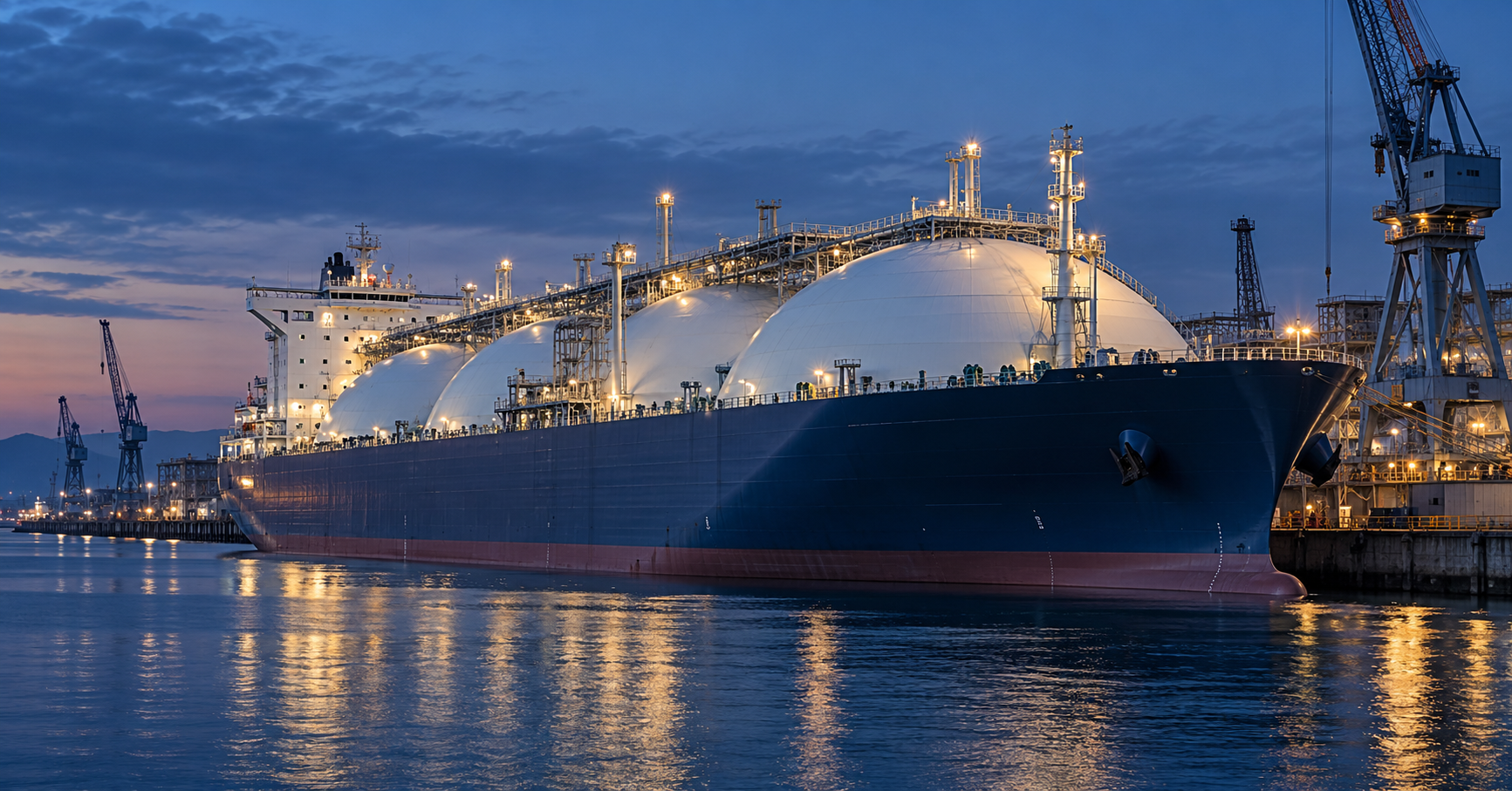
Capital Clean Energy Carriers’ Larger Fleet Lifts Earnings as 2027 Vessel Payments Approach
CCEC’s third-quarter revenue and earnings increased as new ships entered service. Large payments in early 2027 bring the funding plan into focus. Existing charters and operating cash provide support, while borrowing terms and exposure to market-linked rates shape the cash ultimately retained for shareholders.
 Energy
Eni’s Higher Payout Combines Stronger Operations With a Restructured Approach to Funding Growth
Eni’s higher production and refining profits support a larger shareholder payout. Outside capital also helps fund expansion and lowers reported net debt, while sharing future earnings with partners. The benefit is greater financial flexibility, with the capacity for further distributions depending on cash generation across the retained portfolio.
About Alliance Equity Research
Alliance Equity Research publishes independent and company-sponsored equity research on undercovered, emerging, and high-potential public companies globally. Our analyst-built, model-backed research combines fundamental business analysis, financial forecasting, and valuation.
Email: info@alliancekp.com · Website: https://allianceequityresearch.com
For detailed company research, financial models, or coverage inquiries, contact our research team.
Research commentary for informational purposes. This document does not constitute personalized investment advice or a Buy, Hold, or Sell recommendation. For important disclosures, including information about research sponsorship and potential conflicts of interest, visit allianceequityresearch.com/disclosures.