 Alliance Equity Research
SpaceX’s $44 Billion GPU Financing Moves Upfront Spending Into Quarterly Lease Payments
Apollo and Goldman Sachs priced about $44 billion of notes to fund computing equipment that an Apollo-managed entity plans to lease to SpaceX. The financing spreads the cost of NVIDIA’s next-generation chips over roughly five years per delivery, with quarterly rent starting when the equipment arrives. SpaceX’s AI business reached operating profitability in the September quarter while continuing to spend heavily on capacity. The economics of the new leases will depend on how quickly SpaceX can make that capacity available to cloud customers and earn enough from it to cover rent and operating costs.


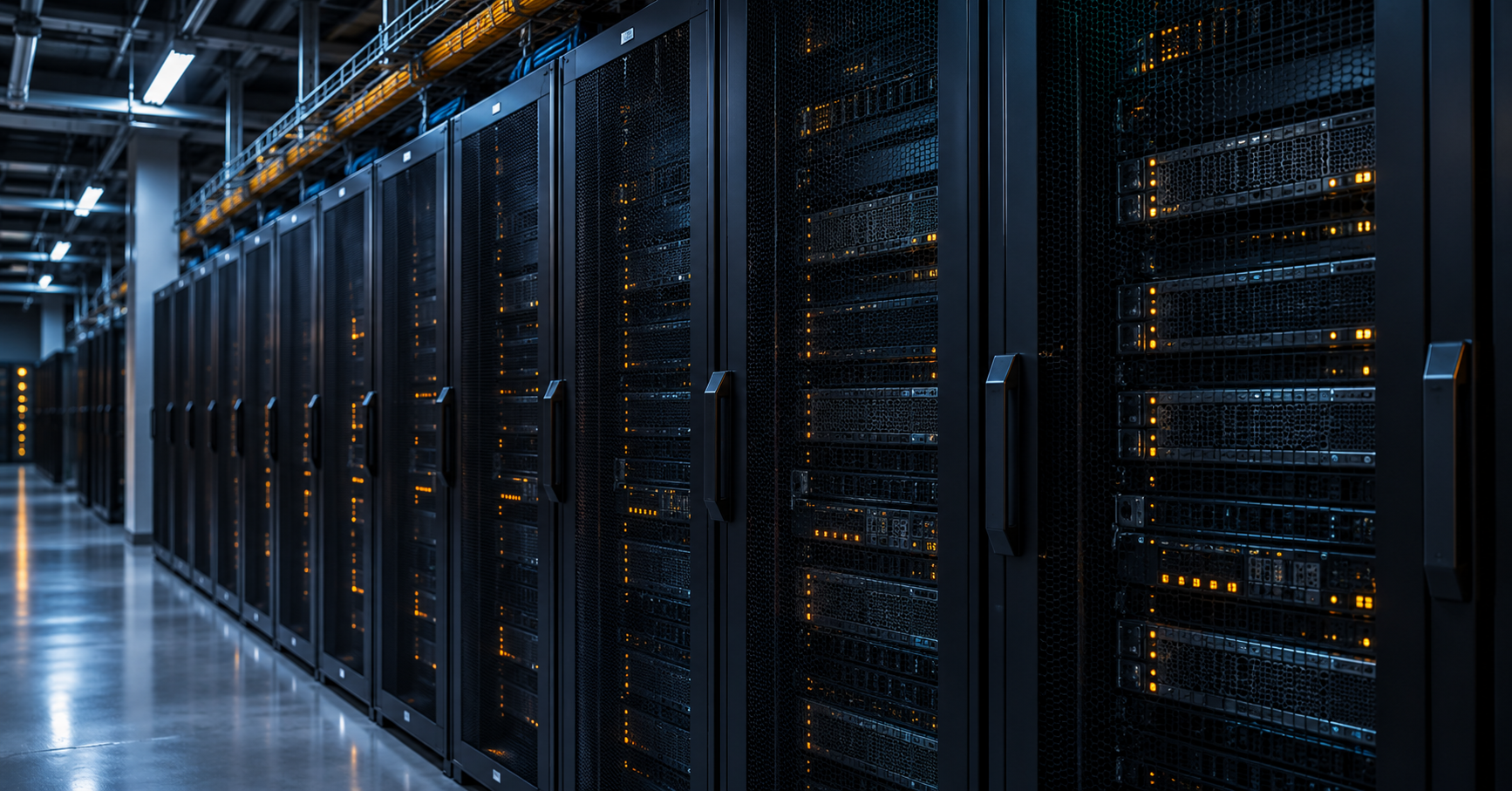
Apollo and Goldman Sachs priced approximately $44 billion of notes on Nov. 20 to fund computing equipment for SpaceX. The proposed structure finances the hardware purchase through an Apollo-managed lessor and spreads SpaceX’s payments over the life of each lease. Rent is expected to start as the equipment arrives in the first half of 2027. The timing of customer-ready capacity will determine how much of that new payment obligation SpaceX can support with cloud revenue from the equipment.
What the notes finance
SpaceX operates a launch business and the Starlink satellite broadband network. Its third segment, Super Intelligence, includes the Grok AI model and related services, cloud computing, the Cursor coding business and advertising on X. NVIDIA’s Vera Rubin equipment covered by the financing is for data centers on Earth. SpaceX can use such capacity to run its own AI products and to supply computing power to outside customers.
Under SpaceX’s October commitment, an Apollo-managed entity is to acquire groups of graphics processing units, or GPUs, and related hardware and lease them to SpaceX at data centers it selects. Goldman Sachs structured the financing, with Apollo and Goldman coordinating the sale of senior and subordinated notes. The two levels of debt give investors different priority in payment. SpaceX, as lessee, would pay rent to the equipment owner. The November pricing release says demand allowed the notes to be upsized, with the first lease schedules still expected to start on equipment delivery in the first half of 2027. The transaction creates an equipment order for NVIDIA and an investment for noteholders with different claims on the financing. SpaceX earns the revenue from using the equipment and owes rent under the lease.
The note issuance and the earlier lease estimate measure different obligations. The arrangers priced approximately $44 billion of notes, while SpaceX’s October filing estimated approximately $40 billion of aggregate principal payments under its leases. The pricing release gives no revised lease principal or reconciliation between the amounts. October’s filing anticipated execution of the master lease by year-end, subject to closing conditions. Pricing advances the funding process, and the lease payment schedule remains the relevant measure for SpaceX shareholders.
Payments start in batches
Each equipment delivery is expected to have a separate lease schedule lasting about five to five and a quarter years. The October commitment generally provides for quarterly rent paid in advance, with a principal component equal to one-twentieth of the financed cost of a batch plus fixed-rate interest on the outstanding balance and ongoing costs. At the earlier $40 billion estimate, the one-twentieth formula indicates roughly $2 billion of principal per quarter once all batches are underway, before interest and other costs. Actual payments depend on final terms and delivery timing.
The structure lets SpaceX bring hardware into use without paying its entire purchase price at delivery. It leaves the operating economics with SpaceX, which needs powered, cooled data centers and workloads to keep the hardware productive. A server delivery and the start of customer billing can occur on different dates. SpaceX recognizes cloud revenue as it makes reserved capacity available, using the phased delivery of capacity during the start-up period and recognizing steady monthly fees thereafter. If commissioning runs behind equipment delivery, rental payments can start while billable capacity is still ramping up.
An existing cloud agreement disclosed in June illustrates how much the contract terms can matter. Google agreed to pay $920 million a month from October 2026 through June 2029 for access to computing equipment, including about 110,000 NVIDIA GPUs. The disclosed terms allow either party to terminate on 90 days’ notice after Dec. 31, 2026. The June disclosure predates the proposed Rubin lease and does not assign the new equipment to Google.
The AI segment has reached operating profit
In its September-quarter results, SpaceX reported $7.56 billion in AI segment revenue, up from $813 million a year earlier. Solutions and infrastructure sales accounted for $7.02 billion and advertising for $538 million. The first category includes multiple businesses, so it cannot serve as a measure of GPU rental revenue. SpaceX attributed growth primarily to new cloud agreements, the Cursor acquisition and greater use of Grok. One customer in the AI segment accounted for 34.5% of group quarterly revenue, illustrating the role that a single large contract can play in capacity monetization.
| Super Intelligence segment, three months ended Sept. 30 | 2025 | 2026 |
|---|---|---|
| Revenue | $813 million | $7.56 billion |
| Operating income (loss) | $(1.72) billion | $431 million |
| Operating margin, AER calculation | (211.8)% | 5.7% |
| Adjusted EBITDA | $(428) million | $4.95 billion |
| Capital expenditure | $4.76 billion | $16.44 billion |
Source: SpaceX’s third-quarter earnings release, segment results and adjusted EBITDA reconciliation.
Quarterly operating income turned positive even after $1.22 billion of acquisition-related stock compensation. SpaceX’s reconciliation to adjusted EBITDA adds back that charge, $821 million of other share-based compensation and $2.47 billion of depreciation and amortization, plus small acquisition and restructuring expenses. The addbacks help explain the wide gap between adjusted EBITDA and operating profit. The $16.44 billion in capital spending shows how much it was investing in new assets during the same period. Depreciation on hardware already in service and cash spent to add new capacity have different implications for the returns on the next deployment.
What the lease changes for cash
For the first nine months of 2026, SpaceX generated $13.10 billion of operating cash flow against $48.07 billion of cash purchases of property, plant and equipment. The AI segment accounted for about $40.00 billion of that spending. Operating cash flow rose from $4.12 billion a year earlier, with higher earnings before noncash items and increased upfront payments from launch and connectivity customers. The year-over-year improvement in deferred revenue contributed $4.52 billion, and larger receivables and inventories absorbed cash. These figures are group-wide and include cash collected for work SpaceX still owes customers.
At Sept. 30, cash and short-term securities totaled $89.86 billion against $38.84 billion of recorded debt and finance leases. That liquidity followed $85.68 billion in net IPO proceeds. In the first nine months, $51.83 billion in proceeds from debt and other financing obligations accompanied $39.85 billion in repayments of those obligations. Net financing inflows of $99.82 billion funded capital spending and other cash uses, including net purchases of marketable securities. The GPU lease adds another funding source while creating payments beyond the obligations recorded at September 30. The October estimate of $40 billion of future lease principal is roughly the size of reported debt and finance leases at that date. This compares obligations for scale, with one amount representing expected future principal payments and the other the carrying value of liabilities already on the balance sheet.
Revenue has to follow the delivery schedule
SpaceX’s October announcement said management was seeing payback of less than one year on AI infrastructure investments. The company did not provide a tranche-level return calculation for Rubin. The growth of reserved cloud services gives SpaceX a way to make cash flows steadier, while the concentration of existing revenue shows how much the availability and terms of large contracts can matter.
As AER’s analysis of Broadcom’s financing for Anthropic showed, financing increasingly determines how quickly demand for AI hardware can turn into installations. In SpaceX’s case, the new obligations start with hardware deliveries. The first half of 2027 should show how closely those dates line up with capacity becoming available under paying cloud contracts. A short interval gives SpaceX a better chance to fund lease payments as the equipment comes online. A longer interval leaves the company paying rent before the same equipment starts generating cloud revenue.
This material is provided for informational and educational purposes only and does not constitute investment advice or a recommendation to buy or sell any security.
Companies Discussed
About AER Insights
Alliance Equity Research publishes timely insights on company-specific developments, industry trends, capital markets activity, and emerging investment themes across global public markets, with a particular focus on undercovered companies, sectors, and developments that often receive limited attention from mainstream financial research. Our analysis focuses on the financial, strategic, and valuation implications behind the headlines, using company disclosures, filings, market data, and sector context to help investors understand what matters, why it matters, and what to watch next.
Get AER Insights by Email
Receive new AER Insights and research updates in your inbox.
Related Insights
 Industrials & Aerospace
MasTec’s $1.25 Billion Murphy Deal Adds Maintenance Work That Outlasts Construction
MasTec agreed to pay approximately $1.25 billion in cash for Murphy, a mechanical contractor that installs and maintains systems in data centers, hospitals, factories and other facilities. Murphy’s projected $140 million of 2026 adjusted EBITDA implies an upfront price of about 8.9 times that figure, before a possible earnout. The acquisition adds skilled crews and gives MasTec a route to service work after construction ends. The price reflects earnings that have yet to be realized for the full year. The cash Murphy contributes after financing costs, equipment spending and working capital will help determine how quickly MasTec can reduce leverage.
 Market Commentary
More Shopping Trips Lift Target’s Earnings as Tariff Refunds Raise Its Outlook
Target’s third-quarter comparable sales rose 5.6%, driven mainly by more transactions. Gross margin improved even after removing $301 million of tariff refunds, although higher store labor and other costs absorbed some of the gain. The retailer raised its full-year earnings outlook, but most of the increase in the midpoint reflects refunds already recognized. The distinction matters as Target prepares to spend $5 billion to $6 billion on capital projects in 2027. Holiday traffic, markdowns and cash tied up in merchandise will help show how much of the improvement can carry forward.
 Capital Markets & M&A
Logan’s Ovintiv Deal Pairs a Montney Cash Exit With New Heavy-Oil Development
Logan shareholders would receive C$1.40 per share in cash and an interest in a new heavy-oil company. Logan Oil’s planned C$120 million financing would leave C$50 million after Woodcote’s cash purchase price, before fees and other spending. Its development capacity will depend on operating cash generation and Sawn Lake’s capital requirements.
 Capital Markets & M&A
LSEG’s Octus Deal Expands Credit Data at a Price That Requires Sustained Growth
The $3.535 billion acquisition adds recurring revenue from credit research, private loan documents and portfolio tools. LSEG gains a credible route into specialist customer workflows, but debt funding and an initially neutral adjusted EPS impact leave sustained growth central to the return on its investment.
About Alliance Equity Research
Alliance Equity Research publishes independent and company-sponsored equity research on undercovered, emerging, and high-potential public companies globally. Our analyst-built, model-backed research combines fundamental business analysis, financial forecasting, and valuation.
Email: info@alliancekp.com · Website: https://allianceequityresearch.com
For detailed company research, financial models, or coverage inquiries, contact our research team.
Research commentary for informational purposes. This document does not constitute personalized investment advice or a Buy, Hold, or Sell recommendation. For important disclosures, including information about research sponsorship and potential conflicts of interest, visit allianceequityresearch.com/disclosures.